✦ In this postA bilingual wedding ceremony requires a little extra planning but it’s one of the most meaningful things you can do for your guests. Here’s how to structure it so everyone feels included without the ceremony feeling like a translation exercise.
Let’s talk about bilingual ceremonies. When done well, bilingual ceremonies are incredibly powerful and emotional. They’re one of the most meaningful parts of a multicultural wedding because you’re not just translating words, you’re blending cultures and families into one shared moment. It’s a way to make sure that both sides of the family feel seen, included, and part of the story you’re beginning together.
But there’s also a delicate balance to strike. Because while bilingual ceremonies can be beautiful, they can also become repetitive if not structured thoughtfully. The last thing you want is for your ceremony to drag on and for guests to start checking the time until cocktail hour starts! With a few intentional choices, you can create a ceremony that honors both languages, keeps guests engaged, and still feels natural. For more on making all your guests feel included throughout the entire wedding weekend, read our guide on 10 tips to make guests feel included at a bilingual wedding.
TIP 1
Decide What “Bilingual” Means for You
Just because your ceremony includes two languages does not mean it needs to be 50/50. Take a look at your guest ratio. If your guests are 80% English-speaking and 20% French, or 70% Spanish-speaking and 30% English, then you don’t need to split everything down the middle.
Instead you might have the main parts in one language, and include key emotional moments in the other. Other ways to incorporate two languages include split readings or saying your vows in one language and repeating a phrase in the other. Balance does not always mean 50/50. If you’re still deciding which languages to use, our guide on 8 first steps for planning a bilingual wedding walks through how to make that decision early in the planning process.
TIP 2
Don’t Repeat Everything
This is the biggest misconception for bilingual ceremonies. A ceremony should be 45 minutes to one hour at the absolute maximum. If you repeat every single sentence in two languages, you will double the length and lose energy. Instead:
- Alternate sections in different languages
- Summarize instead of fully repeat
- Translate only key moments
At the end of the day, your guests don’t need a literal translation of every sentence. What matters most is that they understand the key moments and feel included in the experience. When the ceremony flows naturally, both languages can coexist beautifully without slowing the magic of the moment.
TIP 3
Invest in a Truly Bilingual Officiant
If you take away one thing from this article, let it be this: invest in a bilingual officiant. This is not the moment for “my cousin kind of speaks both languages.” Switching fluidly between languages is a real skill, and doing it in front of a live audience makes it more important. Add to that the fact that it’s happening during one of the most meaningful moments of your life, and the stakes are even higher.
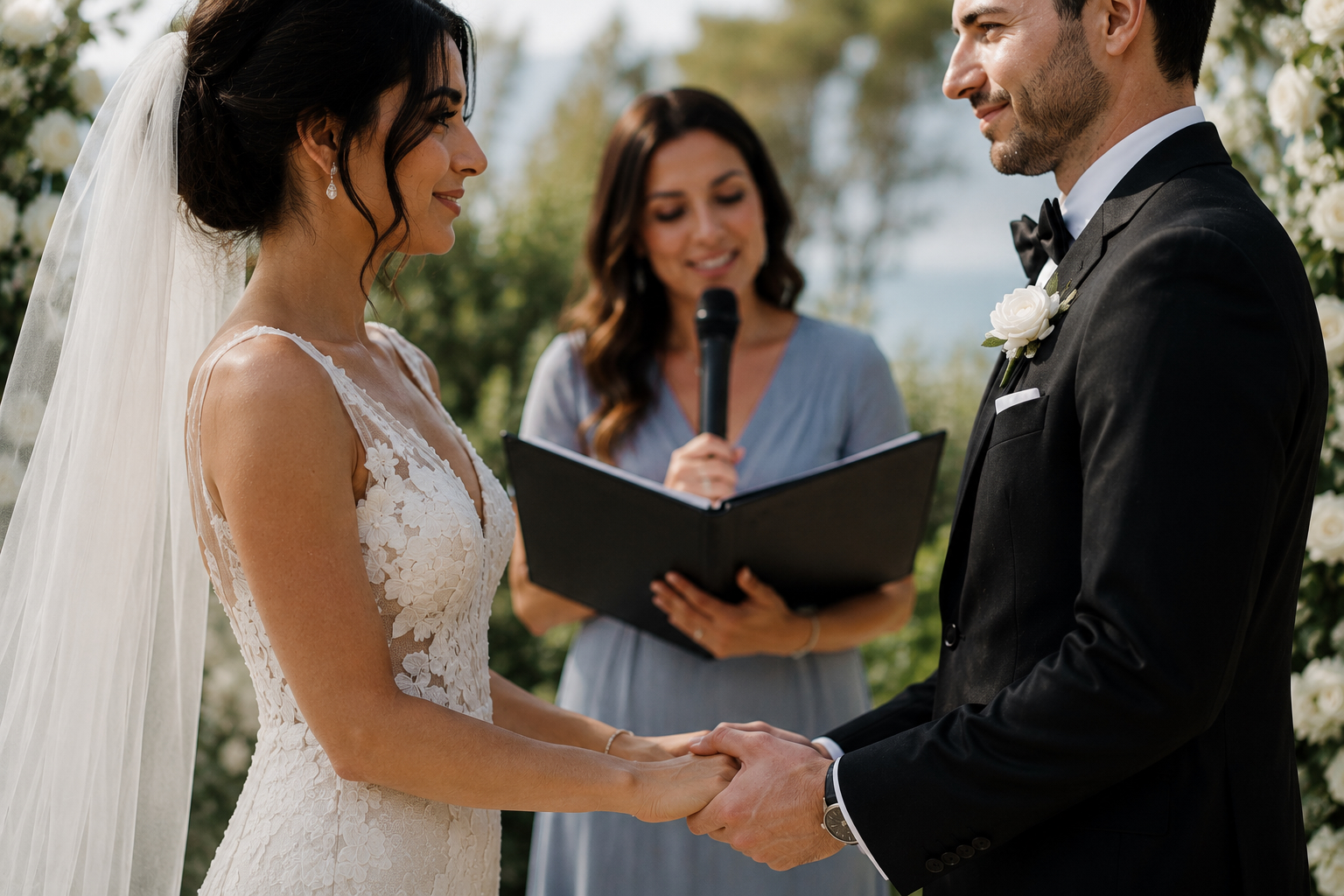
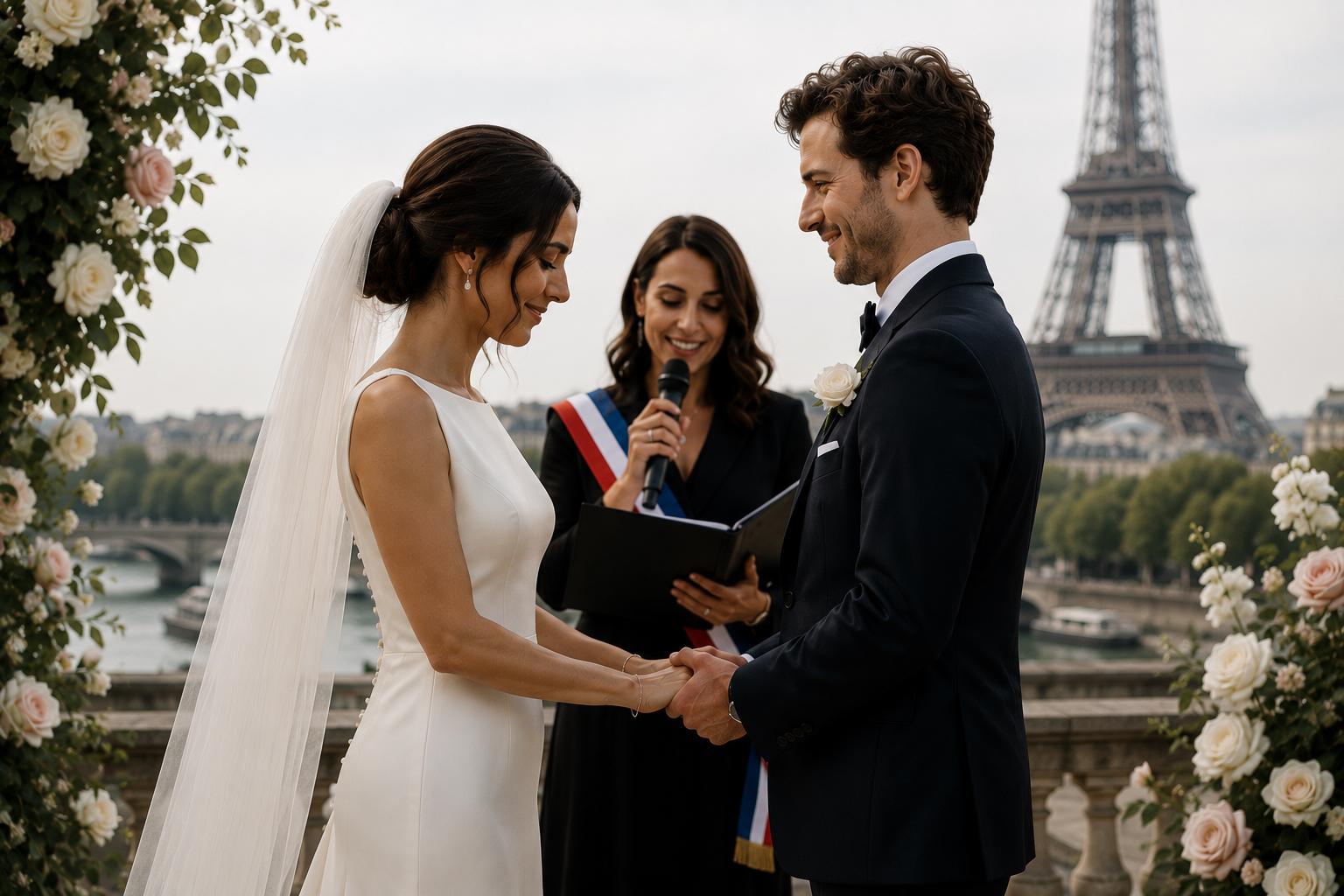
A good bilingual officiant doesn’t just translate words. They speak both languages, understand cultural nuances, and know how to move between languages in a way that feels seamless. They also know how to control the pacing of the ceremony so that the flow stays natural and engaging.
When selecting your officiant, take the time to have an actual conversation with them in both languages. It’s the best way to see how comfortable they are switching back and forth. Because nothing breaks the emotional flow of a ceremony faster than awkward language transitions or mispronounced words. This is one of the most important investments you’ll make for a bilingual wedding ceremony!
TIP 4
Use Ceremony Programs Smartly
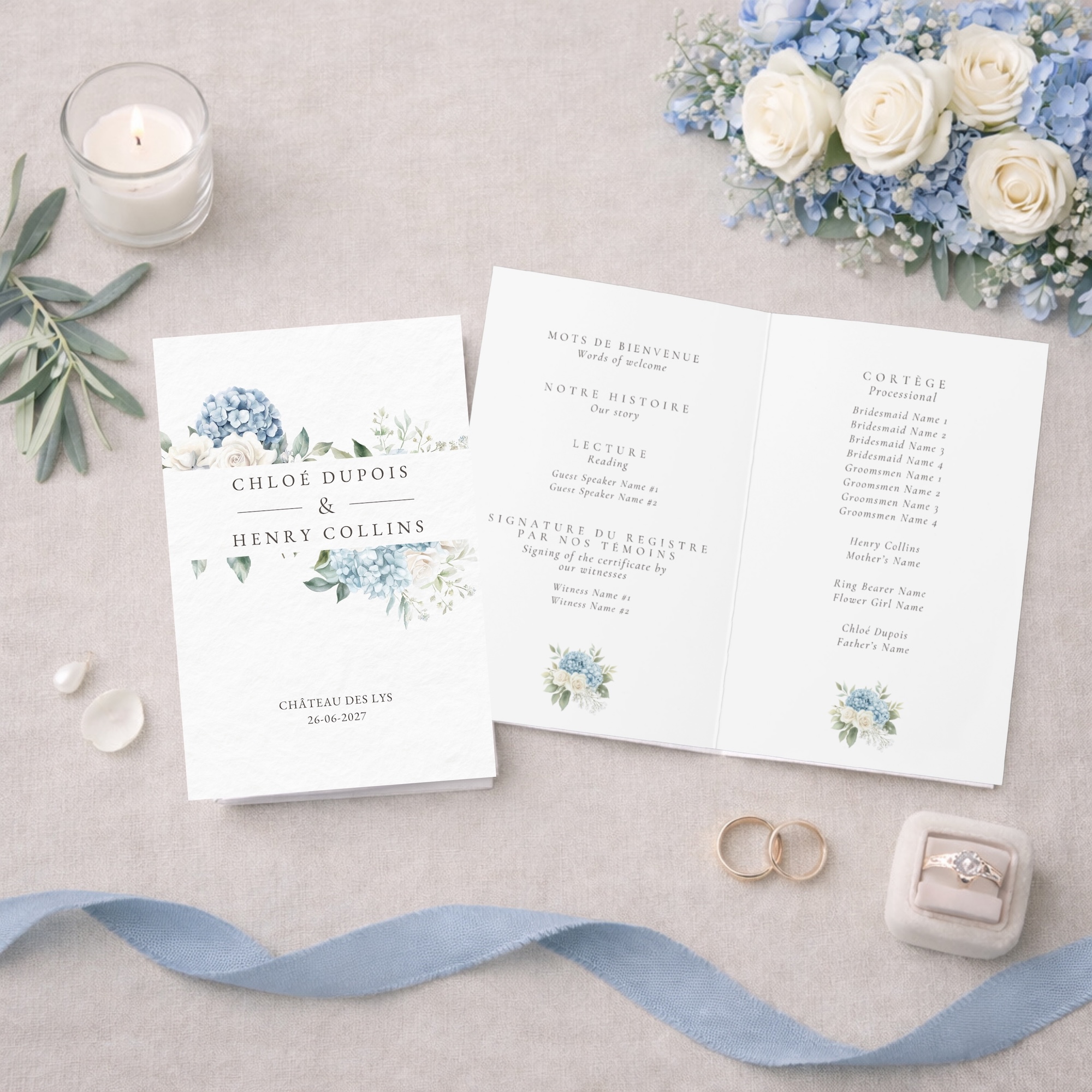
Your ceremony program can become your secret weapon when planning a bilingual ceremony. It’s one of the easiest ways to help guests follow along. And the good news is you have several options depending on how detailed you want it to be.
One approach is a section-based program. Instead of translating every word, you simply outline the key parts of the ceremony such as the welcome, readings, vows, and ring exchange. This gives guests a clear sense of the structure without doubling the length of your program or your printing costs.
Another option is a word-for-word translation. Some couples prefer this because it allows guests to follow the entire ceremony in their own language. While very thoughtful, keep in mind that this version can quickly become quite long and more expensive to print.
A great middle ground is a hybrid approach. Include the main ceremony sections in the printed program and add a QR code that links to a full translation guests can open on their phone. It keeps the printed program clean and elegant while still giving guests access to the full content. If you’re looking for a beautifully designed bilingual ceremony program template, browse our Etsy shop for options designed specifically for multicultural weddings.
TIP 5
Start With a Warm Multilingual Welcome
Before you even begin the ceremony, set the tone by having your officiant welcome guests in both languages right from the start. And if you have guests traveling from multiple countries or speaking additional languages, consider calling those out too.
At our wedding, our officiant welcomed guests in both main languages and then acknowledged the different countries represented that day. It was such a small detail, but it made a huge impact. It always makes you feel special and included when you hear a word called out in your native language. For bilingual and multicultural weddings especially, that warm welcome sets the emotional tone before a single vow is spoken.
TIP 6
Say “I Do” in Both Languages
This is a small detail, but such an important one. Even if the ceremony is primarily conducted in one language, consider saying “I do” or the key line from your vows in both languages. It’s a simple moment that can carry a lot of meaning.
You might choose to say it in your partner’s language as a gesture of love and respect toward their family and culture. Hearing those words in their own language can be incredibly moving for family and guests who may not fully understand the rest of the ceremony. Saying “I do” in both languages symbolically brings both sides of your world together: two families, two cultures, one shared promise. And yes, this is usually the moment when the tissues come out!
TIP 7
Include Guest Interventions in Both Languages
If you’re including readings, family blessings, or short speeches during the ceremony, this is another great opportunity to balance the languages in a natural way. Instead of repeating the same text twice, split them intentionally. For example, one reading can be in one language and the next in the other.
This approach keeps the ceremony moving and creates rhythm rather than repetition. As different presenters come forward, different voices, different family members, different moments, the languages naturally alternate without interrupting the flow.
TIP 8
Clarity Is Everything
One of the most overlooked parts of bilingual ceremonies? Logistics. When guests don’t understand the language being spoken at a particular moment, it can create confusion. Suddenly they’re not sure when to stand, when to sit, or when it’s time to toss petals or rice. You’ve probably seen this before: guests awkwardly glancing at each other, half-standing, half-sitting, waiting for someone else to make the first move.
The easiest way to avoid this is to have your officiant clearly guide guests through the ceremony. Simple transitions like asking guests to stand, inviting them to sit, or letting them know when to prepare petals or confetti should be announced in both languages so everyone understands what’s happening.
Another small but effective trick is for the officiant to incorporate hand gestures along with the announcements. Because if there’s one thing that crosses every language barrier, it’s hand gestures!
Final Thoughts
A bilingual ceremony isn’t about translating every word. It’s about honoring both sides. It’s about making grandparents feel seen. Making friends who traveled across the world to be there feel included. And that’s something your guests will remember long after the wedding is over.
A bilingual ceremony done well doesn’t feel like a translated ceremony. It feels like a celebration that was built for every single person in the room. That’s the goal and it’s absolutely achievable with a little intention and planning.
✦ From our shop
Beautiful, fully bilingual ceremony programs designed for multicultural weddings. Easy to customize, instant download.
Frequently Asked Questions
How do you structure a bilingual wedding ceremony?
The key is to alternate languages rather than repeat everything twice. Have the officiant open with a welcome in both languages, then alternate sections: one reading in language A, the next in language B. Say vows in both languages or say “I do” in both. Use a ceremony program to help guests follow along. Aim to keep the total ceremony between 45 minutes and one hour.
How do you balance two languages in a wedding ceremony?
Balance doesn’t have to mean 50/50. Look at your guest ratio and let that guide you. If 80% of your guests speak one language, that language can carry the majority of the ceremony while the other is used for key emotional moments like vows, readings, and the welcome. The goal is for every guest to feel included in the most important moments, not for every sentence to be translated.
Should you translate your entire wedding ceremony?
No. Translating every sentence doubles the length and kills the energy. Focus on translating the key moments: the welcome, the vows, the ring exchange, and any readings. Use a bilingual ceremony program to help guests follow along without requiring the officiant to translate every word out loud.
How do you write bilingual wedding vows?
You have a few options. You can write your vows in one language and say a key phrase or line in the other. You can write separate versions in each language and deliver both. Or you can say the vows in your native language and have your partner say theirs in their native language. The most meaningful approach is the one that feels authentic to you as a couple.
What is the best way to include non-English speaking guests in a wedding ceremony?
Start with a welcome in their language so they feel acknowledged from the very beginning. Use a bilingual ceremony program so they can follow along visually. Include at least one reading or blessing in their language. And make sure your officiant uses clear hand gestures for transitions like standing and sitting so no one feels lost regardless of which language is being spoken.