✦ In this postA destination wedding welcome guide is one of the most practical and appreciated things you can give your guests. Here’s exactly what to include so every guest arrives informed, prepared, and excited.
We truly believe every destination wedding should include some form of guest welcome guide. It doesn’t need to be fancy, and it definitely doesn’t need to be a 20-page booklet, but in some shape or form, guests need guidance. This could be a printed guide waiting in their hotel room, a folded insert tucked inside a welcome bag, or even a simple, beautifully designed PDF sent by text a few days before the wedding.
You’re probably thinking “But I already have a wedding website.” And yes, you absolutely should have one. But let’s be honest: in the days leading up to your wedding, most guests are not checking the website. They’ve either lost the link, forgotten the password, or they’re already fully in vacation mode.
And if you’ve made last-minute adjustments like pushing back the ceremony start time because of a heat wave (speaking from experience), chances are you’re not logging in to update your wedding website either. A welcome guide becomes that final, clear, and helpful “here’s everything you need to know” for your traveling guests. Pair it with a thoughtful welcome bag for maximum impact. Read our ultimate guide to wedding welcome bags for ideas on how to put one together.
SECTION 1
The Itinerary
Start with the basics. List every event with the start time, exact address, transportation details if applicable, and a dress code reminder if needed. This lets guests know exactly where to be and when.
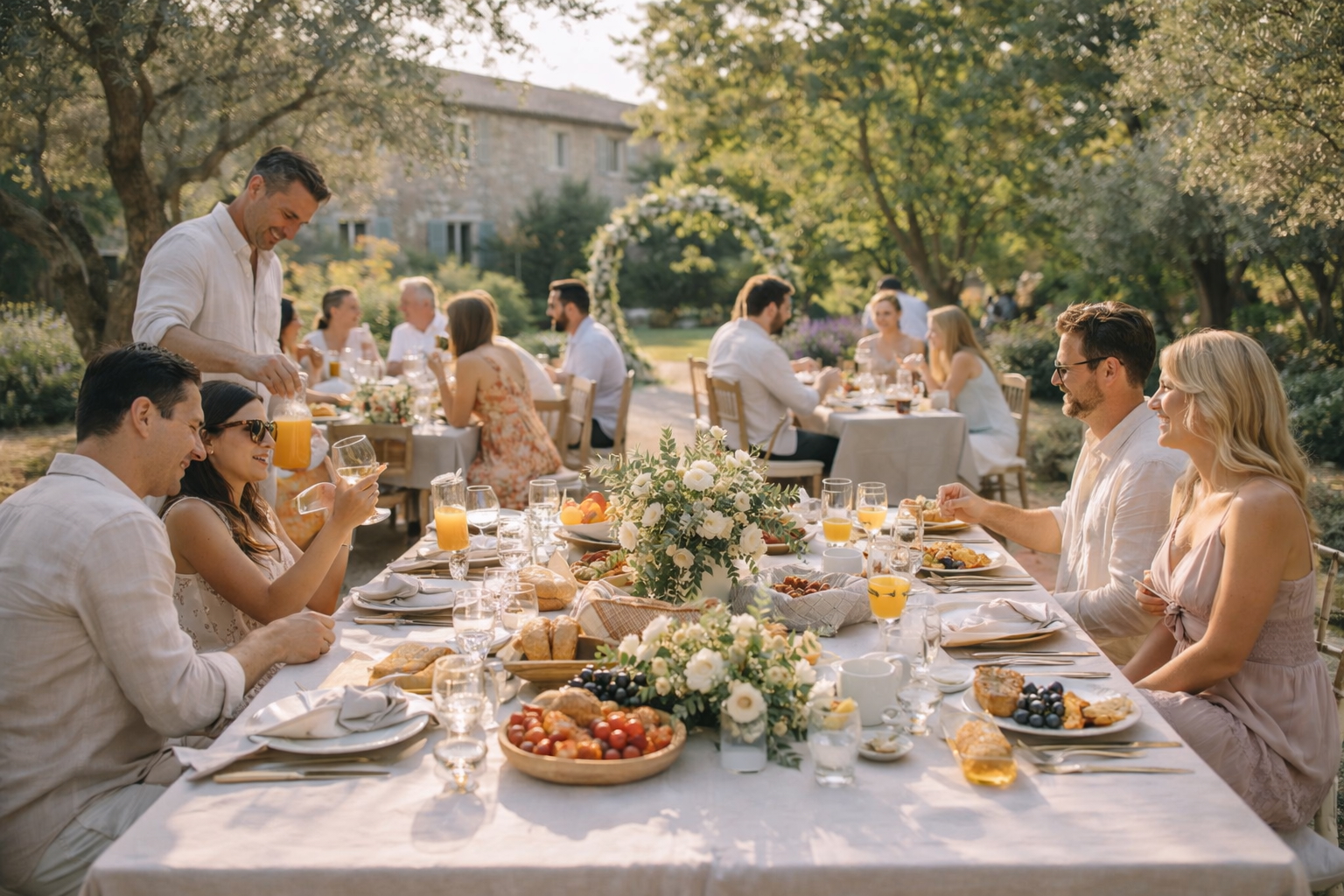
If there are details unique to your celebration, include those too. For example, at our wedding brunch we reminded guests they could bring a swimsuit if they wanted to use the pool. Small notes like this help guests feel prepared and make the experience smoother for everyone.
The more clarity you provide, the fewer “quick question!” texts you’ll receive while you’re trying to enjoy your wedding weekend. And trust me, the last thing you want on your wedding day is to be answering messages about addresses or start times when you should be soaking in the moment.
SECTION 2
Weather Expectations
This one is underrated, but incredibly helpful for guests especially at destination weddings. Including a short note about the expected temperatures and general weather conditions for the weekend can go a long way in helping your guests show up dressed appropriately. It lets them know whether they should bring that pashmina scarf they packed or if it can stay in the hotel room.
You don’t need to include a full meteorology report. Something simple works perfectly, like: “Expect warm afternoons (28-30°C / 82-86°F) and cooler evenings.” This kind of guidance is particularly helpful when guests are traveling from a completely different climate. For more on researching your wedding weekend weather, read our guide on how to predict your wedding day weather.
SECTION 3
Local Restaurant Recommendations
If you’re hosting a destination wedding, most of your guests are arriving somewhere completely new. They don’t know where to eat, what spots are actually good, or which restaurants are just tourist traps. A simple way to help and elevate their experience is by sharing a short list of 3-5 restaurant recommendations and your favorite places.
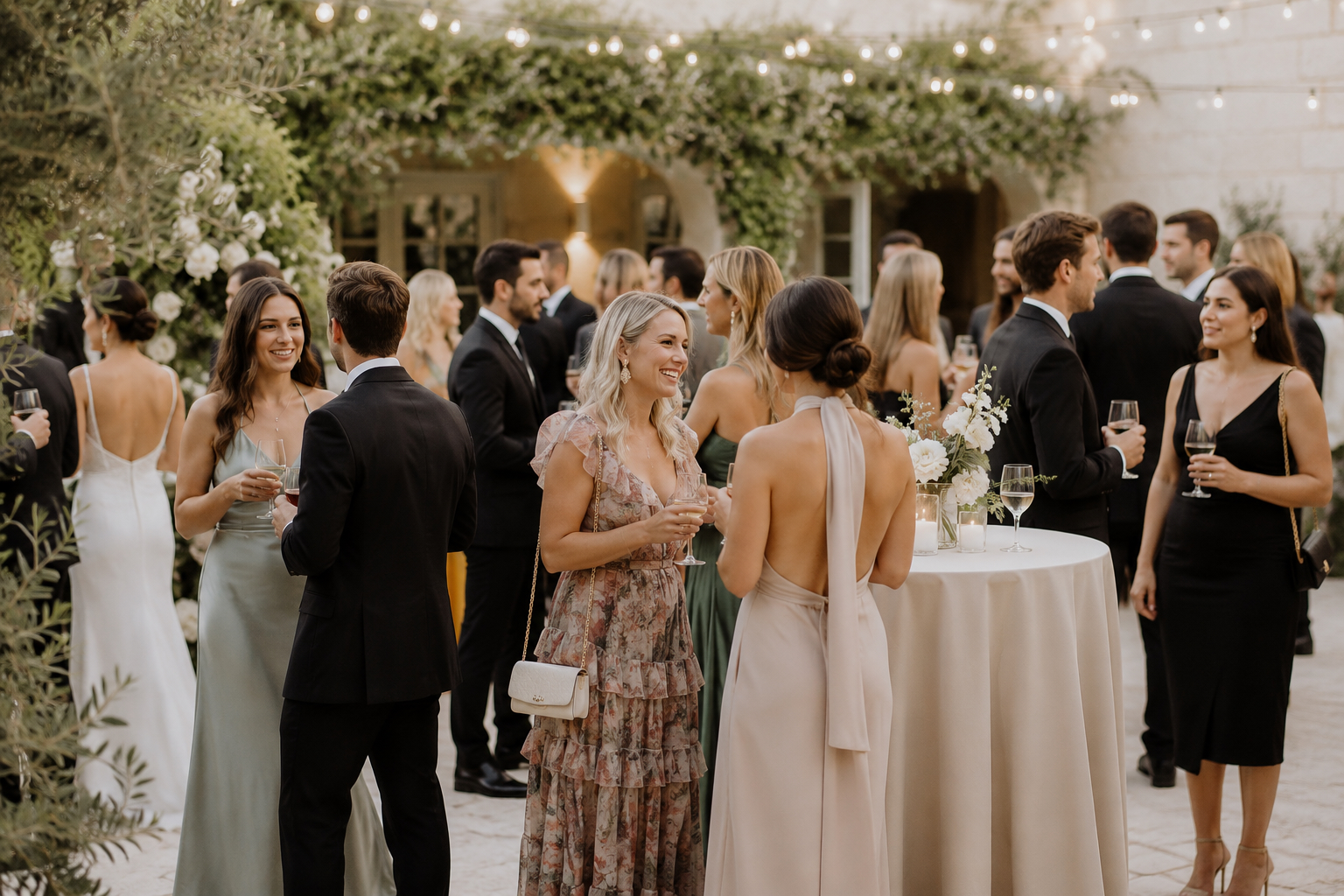
This happened at our wedding. A few friends from different circles ran into each other at one of the restaurants we had recommended. They recognized each other, pulled their tables together, and suddenly it turned into their own little pre-pre-wedding celebration.
We’ve experienced the same thing ourselves as guests at destination weddings. At weddings in Italy and Mexico, we walked into restaurants and spotted familiar faces, tables were being pushed together, and the whole restaurant started to feel like an unofficial kickoff to the wedding weekend. And honestly, as the bride and groom you almost get a little bit of FOMO hearing about how much fun your guests had together!
SECTION 4
Things to See and Do
Help your guests experience the destination like locals by including a few recommendations on things to see and do in the area. While you’ll be busy with last-minute details and probably starting hair and makeup at 8am for a 5pm wedding, your guests are on vacation. Many of them will have free time before or after the wedding events, and they’ll appreciate a short, curated list of places you love or spots that represent the destination.
A few ideas to include could be two or three must-see landmarks, scenic viewpoints for beautiful photos, a local market to explore, a nearby beach or walking path, or a museum or cultural site that captures the spirit of the area. These small recommendations help guests experience the destination in a more meaningful way and turn the wedding weekend into a mini travel adventure.
SECTION 5
A Point of Contact
This is a crucial detail to include in your welcome guide, because the last thing you want on your wedding day is to be the main point of contact for questions. Guests inevitably have small questions pop up: someone gets lost on the way to the venue, someone isn’t sure about transportation timing, or someone just needs quick clarification about where to go.
Instead of those messages landing on your phone, include the contact information of someone who can help. This could be your wedding planner, your day-of coordinator, or even one trusted family member or friend who is comfortable answering quick questions throughout the weekend. By directing guests to the right person ahead of time, you create a small but important buffer that protects your time and your peace of mind. On your wedding day, your only job should be enjoying the moment!
SECTION 6
Optional Personal Touches
If you’d like to take your welcome guide one step further, you can also add a few personal touches. This could be a short note about your story as a couple, a few sentences explaining why you chose this particular destination for your wedding, or translations of a few key local phrases.
You can also include a few cultural insights, which is especially helpful for bilingual or multicultural weddings. A brief explanation of any traditions guests might not be familiar with can make the ceremony feel more engaging and inclusive. Little details like this give guests a deeper understanding of the experience, especially when different languages, cultures, and family traditions come together in one celebration.
Final Thoughts
A guest welcome guide is great for logistics, but it’s more than just logistics. For destination or bilingual weddings especially, it’s a simple way to connect with your guests from the moment they arrive. And while it may seem like a small detail, it can quietly make the entire weekend feel smoother.
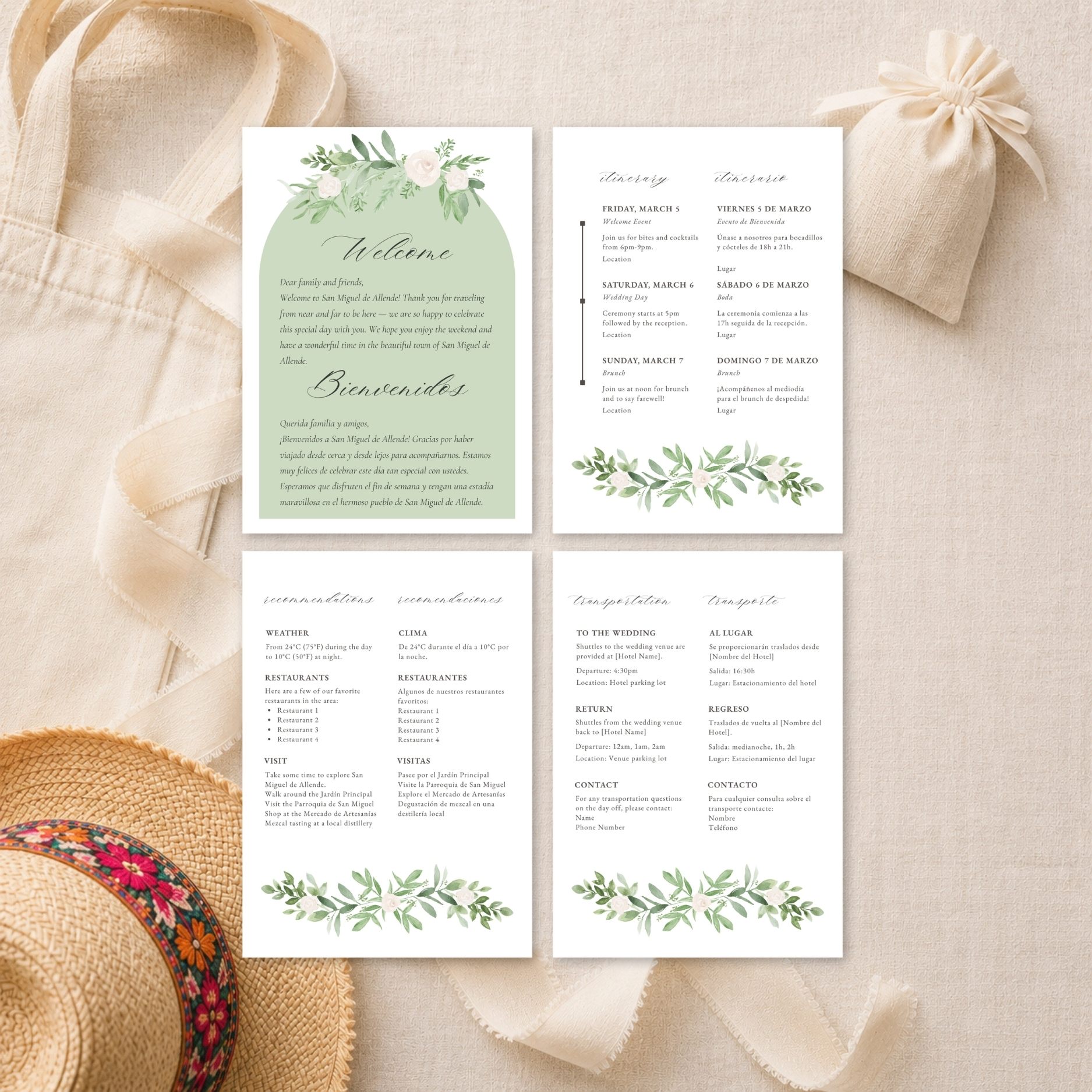
A welcome guide removes the guesswork for your guests and the stress of answering the same questions 50 times for you. Send it early, keep it clear, and let it do the work so you can focus on enjoying your wedding weekend. If you’re looking for a ready-made template you can customize for your own wedding, we have one in our shop designed specifically for bilingual and destination weddings.
✦ From our shop
A beautifully designed bilingual guest guide and weekend itinerary template. Easy to customize, instant download. Perfect for destination and multicultural weddings.
Frequently Asked Questions
What should be in a destination wedding welcome guide?
The essentials are a full event itinerary with times and addresses, weather expectations for the weekend, local restaurant and activity recommendations, transportation details, and a point of contact for guest questions. Optional additions include a personal note from the couple, key phrases translated into your wedding languages, and cultural context for any traditions guests may not be familiar with.
When should you send a destination wedding welcome guide?
Send a digital version 1-2 weeks before the wedding so guests have time to read it and plan accordingly. If you’re including a printed version in welcome bags, that will be distributed on arrival. Don’t wait until the last minute since guests often make restaurant reservations and activity plans in advance.
Should a destination wedding welcome guide be digital or printed?
Both have their place. A digital PDF sent via text or email is easy to distribute in advance and guests can reference it on their phones throughout the weekend. A printed version tucked into a welcome bag feels more personal and is useful for guests who prefer not to rely on their phones. Ideally, do both.
How long should a destination wedding welcome guide be?
Keep it concise. One to two pages is ideal for a printed version. Four to six pages maximum for a more comprehensive digital guide. Guests don’t need a novel, they need clear, practical information they can scan quickly. Use headers, short paragraphs, and bullet points to make it easy to read.
What is the difference between a wedding website and a welcome guide?
A wedding website is a general resource that lives online throughout the planning process. A welcome guide is a focused, practical document sent close to the wedding that covers the specific weekend logistics. Think of the website as the overview and the welcome guide as the final briefing that guests will actually reference when they arrive.