✦ In this postA bilingual ceremony can be one of the most moving parts of your wedding weekend. Here’s how to structure it so every guest stays engaged, no matter which language they speak.
One of the biggest fears bilingual couples have when planning their ceremony is this: will half my guests be zoning out while the other half is paying attention? And honestly, it’s a valid concern. I’ve attended ceremonies where guests were clearly lost, checking their phones, or just waiting politely for it to end. And I’ve attended bilingual ceremonies that were so beautifully structured that no one wanted them to stop.
The difference wasn’t the languages. It was the pacing and the intention behind every choice.
Here’s what actually keeps guests engaged throughout a bilingual ceremony, regardless of which language they speak. And if you haven’t read our full guide on how to plan a beautiful bilingual wedding ceremony, start there first for the broader framework. This post goes deeper on the guest experience side specifically.
TIP 1
Keep It Under an Hour. Non-Negotiable.
This is the golden rule of bilingual ceremonies and the one most couples underestimate. If your ceremony is bilingual and you’re repeating everything twice, you’re looking at a ceremony that could easily run 90 minutes or more. And I promise you, no matter how much your guests love you, 90 minutes of ceremony is a lot.
Aim for 45 minutes to one hour maximum. That’s enough time to make it meaningful without losing people. Everything else, the translation strategy, the readings, the structure, flows from this one decision.
TIP 2
Alternate, Don’t Repeat
Here’s the mindset shift that changes everything: alternating languages is not the same as translating everything. You don’t need to say every sentence twice. You need to make sure the most important moments land for every guest.
Think of it like this. Your officiant opens in language A. A reading is delivered in language B. Vows are said in both. A blessing is given in language A. The ring exchange in language B. The flow moves naturally between languages without anyone feeling like they’re sitting through a repeat.
When you alternate instead of translate, both language groups are equally engaged throughout the ceremony rather than each group tuning out during the “other” language’s turn. For more on how to structure this in practice, read our guide on 10 tips to make guests feel included at a bilingual wedding.
TIP 3
Give Guests a Roadmap
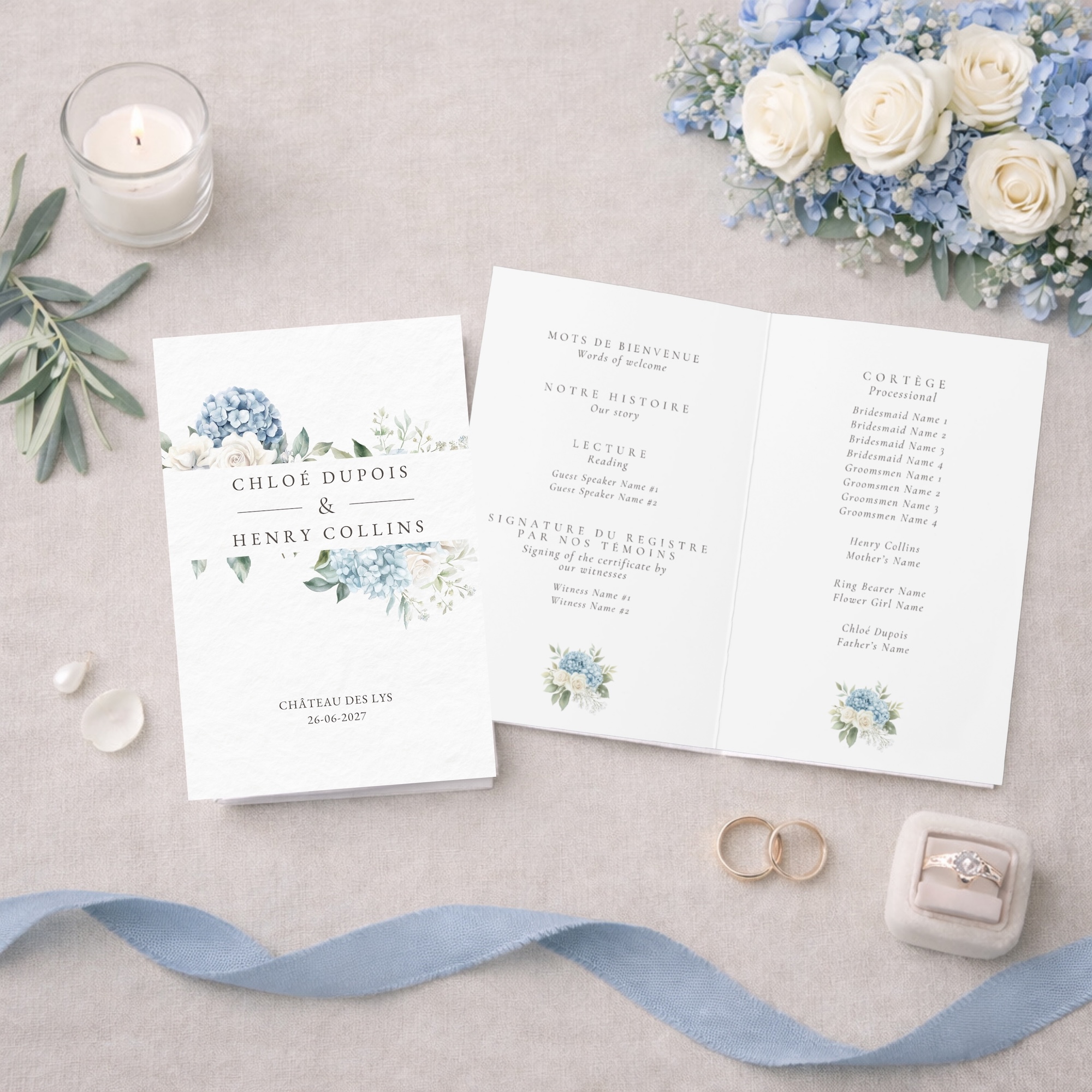
One of the most underrated tools for keeping guests engaged is a ceremony program. Not a fancy one. Not a 10-page booklet. Just a simple, clear guide that tells guests what’s happening and when.
When guests know the structure, they can follow along even when they don’t understand every word being spoken. They know a reading is coming. They know the vows are next. That sense of orientation makes the experience feel inclusive rather than confusing.
We did this at our wedding and it made such a difference. Guests told me afterward how much they appreciated being able to follow the flow. A QR code linking to a full translation is an elegant option if you want to give guests more without printing a novel.
TIP 4
Your Officiant Makes or Breaks It
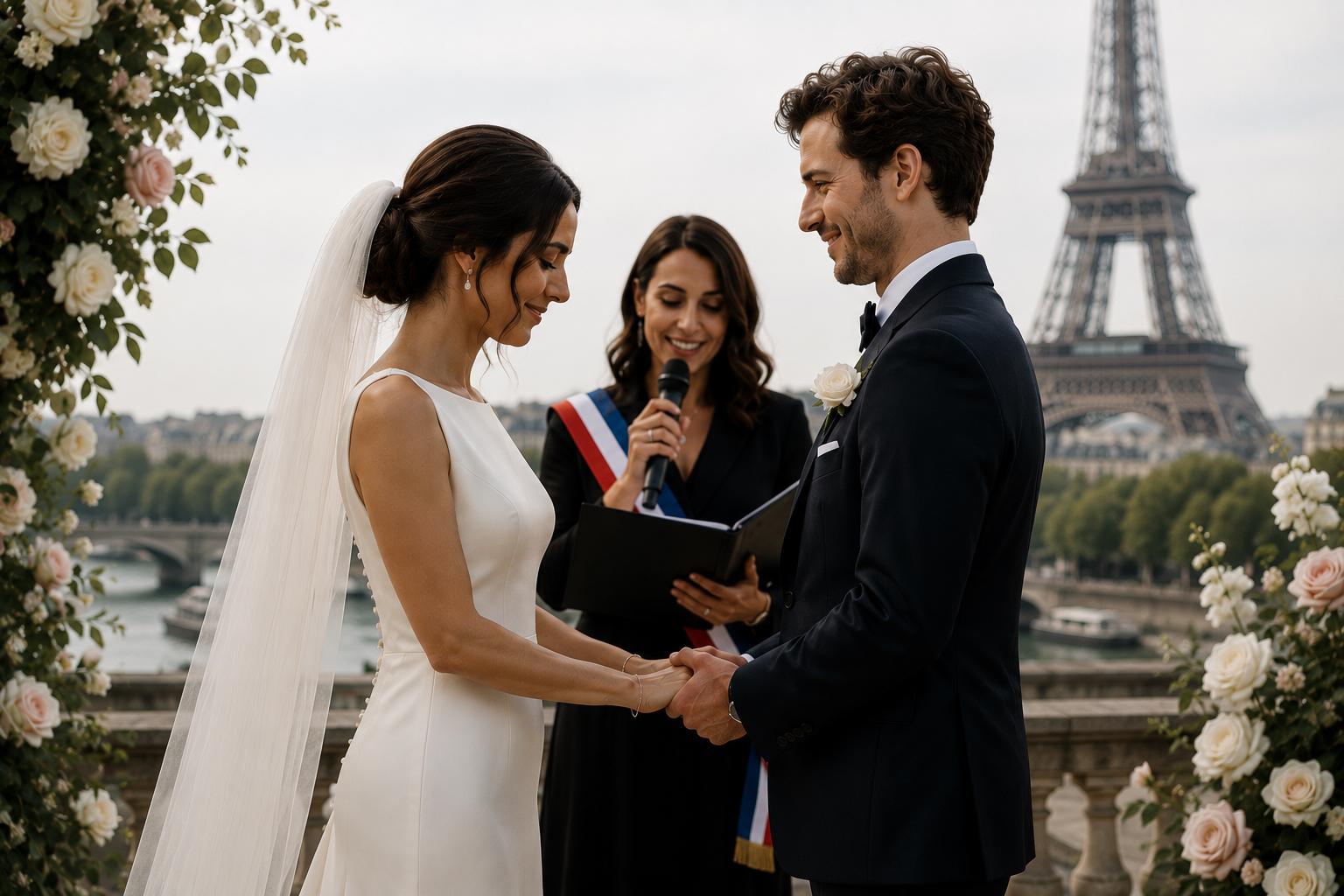
I cannot stress this enough. A bilingual ceremony lives and dies by the officiant. Not just someone who speaks both languages, but someone who is genuinely comfortable switching between them in real time, in front of an emotional crowd, without losing the pacing or the energy.
When we were searching for our officiant, we had video calls in both languages before making any decisions. You learn so much from that. Does the transition feel natural? Does their energy change when they switch? Do they understand the nuance of both cultures, not just the words?
A great bilingual officiant knows when to slow down, when to pick up the pace, and how to read the room in both languages. That skill is worth every penny.
TIP 5
Use Body Language as a Universal Bridge
Something no one talks about enough: body language and gestures cross every language barrier. A bilingual ceremony can use this to its advantage.
When your officiant asks guests to stand, they can raise their hand upward as they say it in both languages. When they invite guests to be seated, a gentle downward gesture does the work instantly. When something emotional or humorous happens, the officiant’s reaction sets the tone for the entire room regardless of what language was just spoken.
This sounds small but it is genuinely powerful. I watched guests at our wedding react to our officiant’s expressions and gestures in real time, laughing, tearing up, smiling, completely in sync even across a three-language ceremony.
Personal noteOne of my favorite moments from our ceremony was something our officiant did right at the very beginning. Before a single vow was spoken, before the ceremony even officially started, our officiant welcomed guests not just in the two main ceremony languages but in every language represented in that room. Spanish for our friends from Spain and Latin America. Dutch for Paolo’s family. Swedish for our friends who had traveled from Scandinavia.
It was a small moment. Maybe 60 seconds total. But the reaction was instant. You could feel people light up when they heard their language called out. It said “we see you, we know you came from far away, and we’re so glad you’re here.” For a bilingual or multicultural wedding especially, that kind of moment costs nothing and means everything.
TIP 6
Choose Readings That Translate Beautifully
If you’re including readings, think carefully about how they translate across languages. Some poetry, prose, and passages land differently when translated. Choose pieces that are universally emotional regardless of language, or find separate readings in each language that carry the same emotional weight rather than translating the same text twice.
This is actually a beautiful opportunity. Two readings, two languages, two different voices, the same underlying message. It feels intentional and artistic rather than repetitive.
What NOT to Do at a Bilingual Ceremony
Just as important as what to do is what to avoid. These are the most common bilingual ceremony mistakes and the ones that most directly cause guests to disengage.
Letting one language dominate for too long. If guests go more than 5-7 minutes without hearing their language referenced, they start to drift. Keep the alternating rhythm consistent throughout so no group feels like an afterthought.
Repeating everything in every language. This is the fastest way to double your ceremony length and lose the emotional momentum. Summarizing and alternating is always more effective than full repetition. Your guests don’t need a word-for-word translation of every sentence. They need to feel the key moments.
Not testing your officiant in all languages before booking. Reading a bio that says “fluent in French and English” is not the same as watching someone switch naturally between them in conversation. Always have a real back-and-forth call or video chat in all ceremony languages before you commit. Awkward transitions and hesitations on the day are almost impossible to fix in the moment.
Forgetting to brief your officiant on pronunciation. Names, cultural words, place names, and any foreign-language phrases should be shared with your officiant well in advance with phonetic spellings if needed. A mispronounced name during your vows is a small thing that can feel very big in the moment, especially to the family members it belongs to.
Not having a written ceremony script and structure locked in. A bilingual ceremony is not the moment for improvisation. Every language transition, every reading, every cue should be scripted and rehearsed. Your officiant should know exactly when they’re switching languages and why, not figuring it out on the fly. The more prepared they are, the more present you get to be.
Final Thoughts
A bilingual ceremony that flows beautifully isn’t a miracle. It’s a result of thoughtful planning, the right officiant, and a clear structure built around your guests’ experience, not just your language checklist.
The goal was never to translate every word. The goal was always to make every person in that room feel like they belong in that moment. When you get that right, guests don’t notice the languages switching. They just feel the love.
✦ From our shop
Beautiful, fully bilingual ceremony programs designed for multicultural weddings. Easy to customize, instant download.
Frequently Asked Questions
How do you keep guests engaged at a bilingual wedding ceremony?
The key is alternating languages rather than repeating everything twice, keeping the ceremony under an hour, providing a clear ceremony program so guests can follow along, and choosing an officiant who transitions between languages naturally and with confidence. Guests stay engaged when the pacing is consistent and the structure feels intentional.
How long should a bilingual wedding ceremony be?
45 minutes to one hour is the sweet spot. Any longer and you risk losing guests regardless of how well the bilingual structure is executed. If you find your ceremony running longer during rehearsal, look at where you can summarize rather than fully translate and trim readings if needed.
What are the most common bilingual ceremony mistakes?
Letting one language dominate for too long, repeating every sentence in both languages which doubles the length, not testing your officiant’s fluency in real conversation before booking, forgetting to brief them on name pronunciations, and not having a fully written and rehearsed ceremony script. Improvisation in a bilingual ceremony rarely ends well.
How do you choose readings for a bilingual wedding ceremony?
Rather than translating the same reading twice, choose separate readings in each language that carry the same emotional weight. Look for pieces that are universally moving regardless of language. Having two different readers deliver one reading each in different languages creates a natural and beautiful rhythm without repetition.
How do you welcome guests at a bilingual wedding ceremony?
Start with a warm welcome from your officiant in all the main languages of the ceremony, and consider going beyond that to acknowledge every language represented in the room. Even a brief hello in the native language of guests who traveled from different countries creates an instant moment of connection and sets a deeply inclusive tone before the ceremony even begins.