✦ In this postThe first 8 steps to planning a bilingual wedding, from choosing a country and setting a budget to deciding which languages to use throughout your celebration.
Congrats on your engagement! Whether you’re still floating on cloud nine or already knee-deep in wedding planning spreadsheets, the first steps can feel overwhelming, especially if you’re planning a bilingual, multicultural, or destination wedding. There are so many decisions to make, it’s hard to know where to even start. It’s like having 27 browser tabs open in your head all at once. That’s why we’ve pulled together the first 8 steps to kick off your planning journey. So take a deep breath, grab a glass of bubbly, and let’s dive in. You got this.
STEP 1
Find a husband.
Haha, kidding. If you’re here, you’ve already checked this one off the list. You’ve found the love of your life that you want to grow old with and you can’t wait to marry him. So cheers to that, because that’s no doubt the hardest step!
STEP 2
Choose Where to Get Married
This is something most wedding planning guides don’t talk about, but for bilingual and multicultural couples it’s one of the very first decisions you’ll face. When we announced our engagement, the first question wasn’t when, it was where: “In France? Italy? The US?”
Being a bilingual or multicultural bride usually means there’s more than one country or region in the mix. Choosing where to host your wedding becomes a major conversation between you and your fiancé. Budget, language, travel logistics for guests, the overall vibe you want, and family expectations all come into play. To help you out, we have a full guide on how to choose a destination wedding venue that walks you through exactly what to look for.
STEP 3
Pick Your Wedding Date
Instead of locking in an exact date right away, start with a season or month. Unless you already have a symbolic date in mind or a number you love, it’s usually best to stay flexible. Just keep in mind that pretty dates like 11/11 often come with a higher price tag because you’re not the only one eyeing them. If you do pick a specific date, be ready to compromise on venue and vendor availability. And before locking in a date, it’s worth doing your research on how to predict your wedding day weather for your chosen location.
Pro tipWeddings are very seasonal. Choosing a date outside of peak season can save you a significant amount. Your wallet will thank you.
STEP 4
Check In With Your Bridal Party
Now’s a good time to check in with bridesmaids, groomsmen, and closest loved ones. If you’re in the wedding stage of life, your friends probably are too which means their calendars fill up fast. The last thing you want is a key person missing your big day because of another wedding. For international couples, this step is even more important. Some guests may need visas or have travel restrictions. In our case, my husband’s best man and my bridesmaid couldn’t make it because of green card travel issues.
If you have guests traveling internationally, check in early about passport validity, visa requirements, and any travel restrictions specific to their country. Some visas take months to process and you don’t want a key person scrambling at the last minute.
STEP 5
Set Your Wedding Budget
Scrolling through Pinterest wedding inspo is fun but let’s get real. You need a budget. And no matter how good you are at budgeting, weddings have a way of blowing past your initial number. I was convinced I could keep everything under budget… spoiler alert: I didn’t.
Start with a number, but be ready to adjust when vendor quotes start rolling in. The wedding industry has a way of humbling even the best budgeters. Once you have a budget in place, understanding how to negotiate with wedding vendors can help you stretch it further without compromising on what matters most.
STEP 6
Define Your Non-Negotiables
Once you’ve set your budget, choose the two or three things that matter most to you. These are your non-negotiables – the categories where you’re willing to spend a little more, even if it means cutting back elsewhere. For our wedding, those were:
- The DJ — I wanted everyone dancing all night, and a great DJ sets the tone for the whole party.
- The catering — Since we got married in France, food was a huge part of the culture and absolutely non-negotiable.
Decide on your top priorities early and let those guide every budget decision that follows. If you’re not sure where to start when evaluating vendors, our guide on how to choose wedding vendors breaks down exactly what to look for.
STEP 7
Choose Your Wedding Theme and Aesthetic
Now the fun part. Choose your wedding theme, color palette, and overall vibe. Forget what’s trending on Pinterest, choose themes that represent you and your fiancé, or reflect the culture or region where you’re celebrating.
For bilingual and multicultural couples, this is a beautiful opportunity to weave in cultural elements from both sides of your family. Think about colors, textiles, flowers, or traditions that feel meaningful to you. Some of our favorite bilingual weddings incorporate subtle nods to both cultures throughout from the stationery and signage to the ceremony décor and table settings. It doesn’t have to be obvious or over the top as sometimes the most meaningful details are the quiet ones.
Pro tipEvery wedding has its own vibe and it’s usually a clear reflection of the couple. That’s what makes it memorable. Don’t let trends override what feels authentically you!
STEP 8
Decide on the Languages for Your Wedding
This one is specifically for bilingual and multilingual couples. If you and your guests speak multiple languages, sit down with your fiancé and decide on the two or three key languages for your wedding. Then think about how to balance them and where to use each one from invitations, save the dates, the ceremony, programs, and speeches.
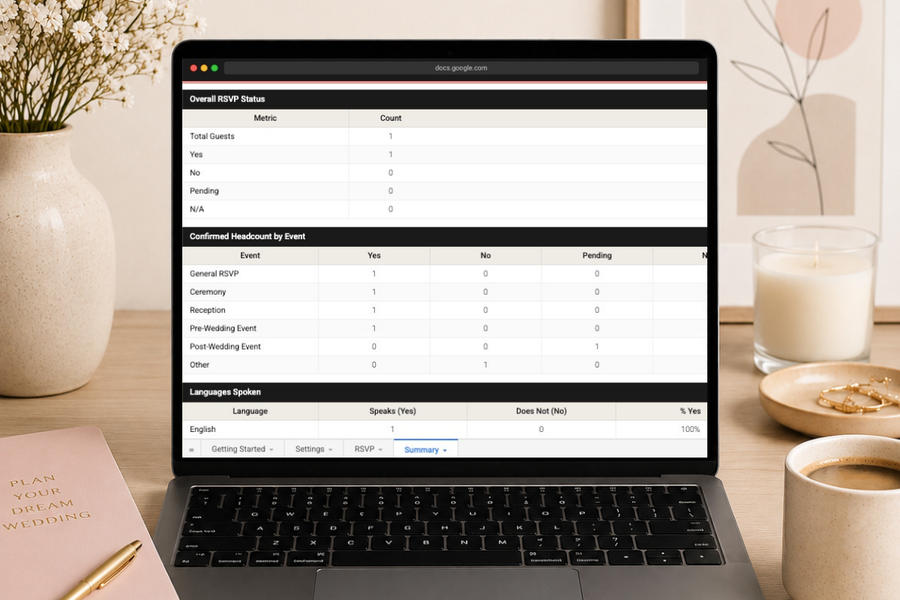
Don’t stress if you don’t know right away because this decision evolves as you plan. A simple starting point: add a language preference field to your guest RSVP tracker. This will give you a clear picture of exactly which languages your guests speak and that data becomes your guide for how to incorporate each language throughout your wedding. We built an RSVP tracker specifically for bilingual weddings that includes language preference tracking, you can find it in our shop. Once you have a sense of your language breakdown, our guide on how to plan a beautiful bilingual wedding ceremony will help you bring it all together.
Final Thoughts
Planning a bilingual wedding is one of the most beautiful and complex things you’ll ever do. It requires more decisions, more coordination, and more love than a standard wedding – and it’s worth every single moment of it. Start with these 8 steps, take it one decision at a time, and trust that it will all come together beautifully.
✦ From our shop
Track RSVPs, meal choices, plus-ones, and language preferences — all in one place. Designed for bilingual and multicultural weddings.
Frequently Asked Questions
What is the first step in planning a bilingual wedding?
The very first step is deciding where to get married. For bilingual and multicultural couples, this is often the most complex early decision, it involves balancing family expectations, travel logistics, budget, and the overall vision you have for your wedding.
How far in advance should you start planning a bilingual wedding?
For destination or bilingual weddings, 12-18 months is ideal. You’ll need extra time to coordinate international vendors, guest travel logistics, and bilingual elements like ceremony scripts and stationery.
How do you decide which country to get married in?
Start by considering where the majority of your guests are based, your budget, and the overall atmosphere you want. Think about visa requirements, travel costs for guests, and whether you have existing connections to vendors or venues in a particular country.
How do you choose which languages to use at a bilingual wedding?
Start by looking at the language breakdown of your guest list. The languages spoken by the majority of your guests should guide your decisions on ceremony, speeches, and stationery. You don’t need to translate everything, instead focus on the moments that matter most, like the ceremony and key signage.
What makes a bilingual wedding different from a regular wedding?
A bilingual wedding involves additional layers of planning around language, culture, and often international logistics. You’re creating an experience that bridges two or more cultures, languages, and families in a way that feels inclusive and intentional for everyone in the room.