✦ In this postFrom the cérémonie laïque to the buffet de minuit, here are the modern French wedding traditions every bilingual couple should know before planning their big day in France.
Planning a bilingual wedding is about so much more than translating invitations or learning a few phrases in another language. A bilingual wedding brings together two families, two cultures, and often two very different ideas of what a wedding should look like. So if you’re marrying into a French family, or simply saying oui somewhere in France, here are a few French wedding traditions worth knowing. That doesn’t mean you need to include them all. The best part is that you get to choose: the traditions that best reflect your union, the ones you want to incorporate into your special day, and leave the rest behind. As a French bride who married an Italian groom and living in the US, that’s exactly what we did. We picked the bits and pieces from each culture that best represented us and made our day truly unique. Let’s get into it.
LA CÉRÉMONIE
The Ceremony
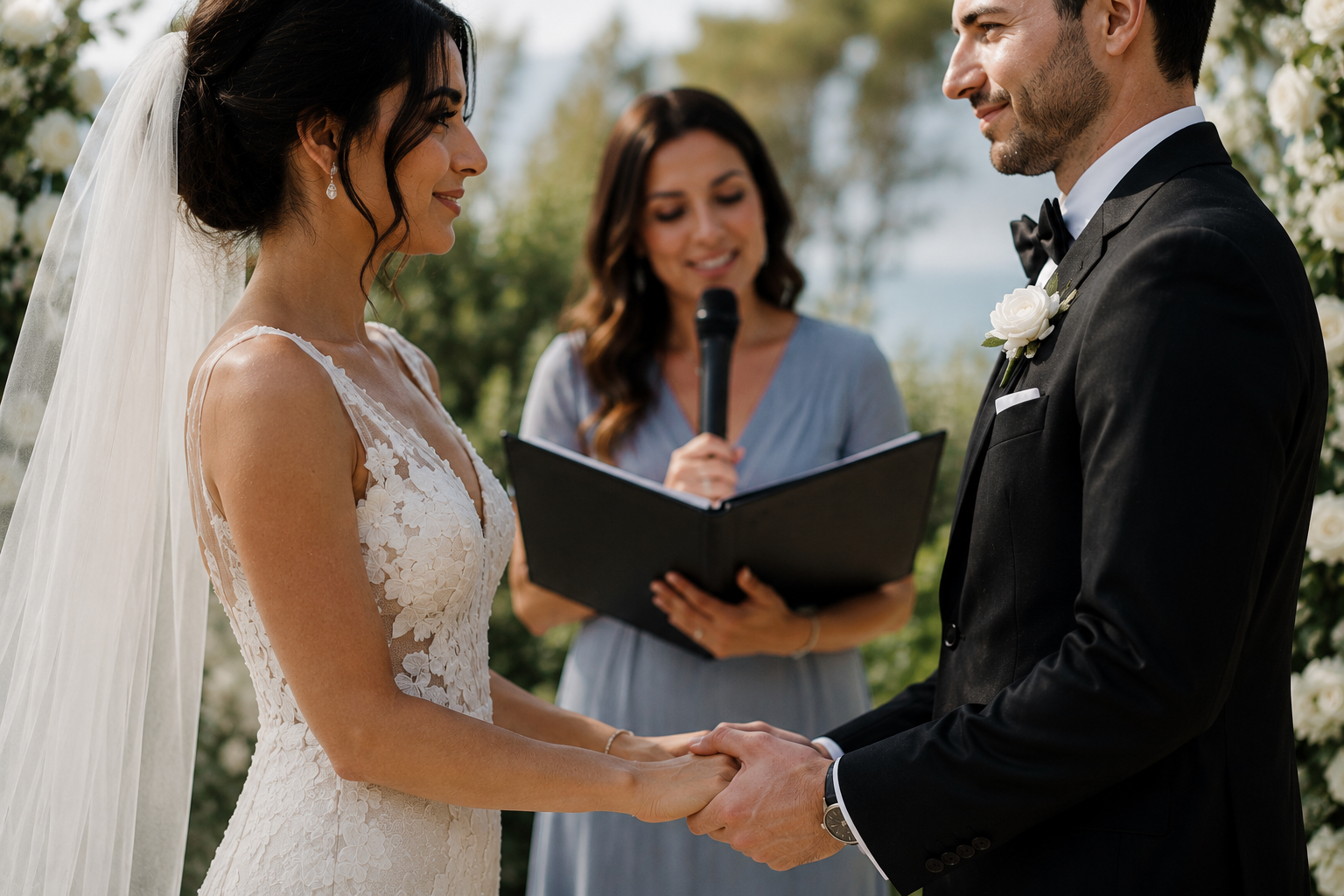
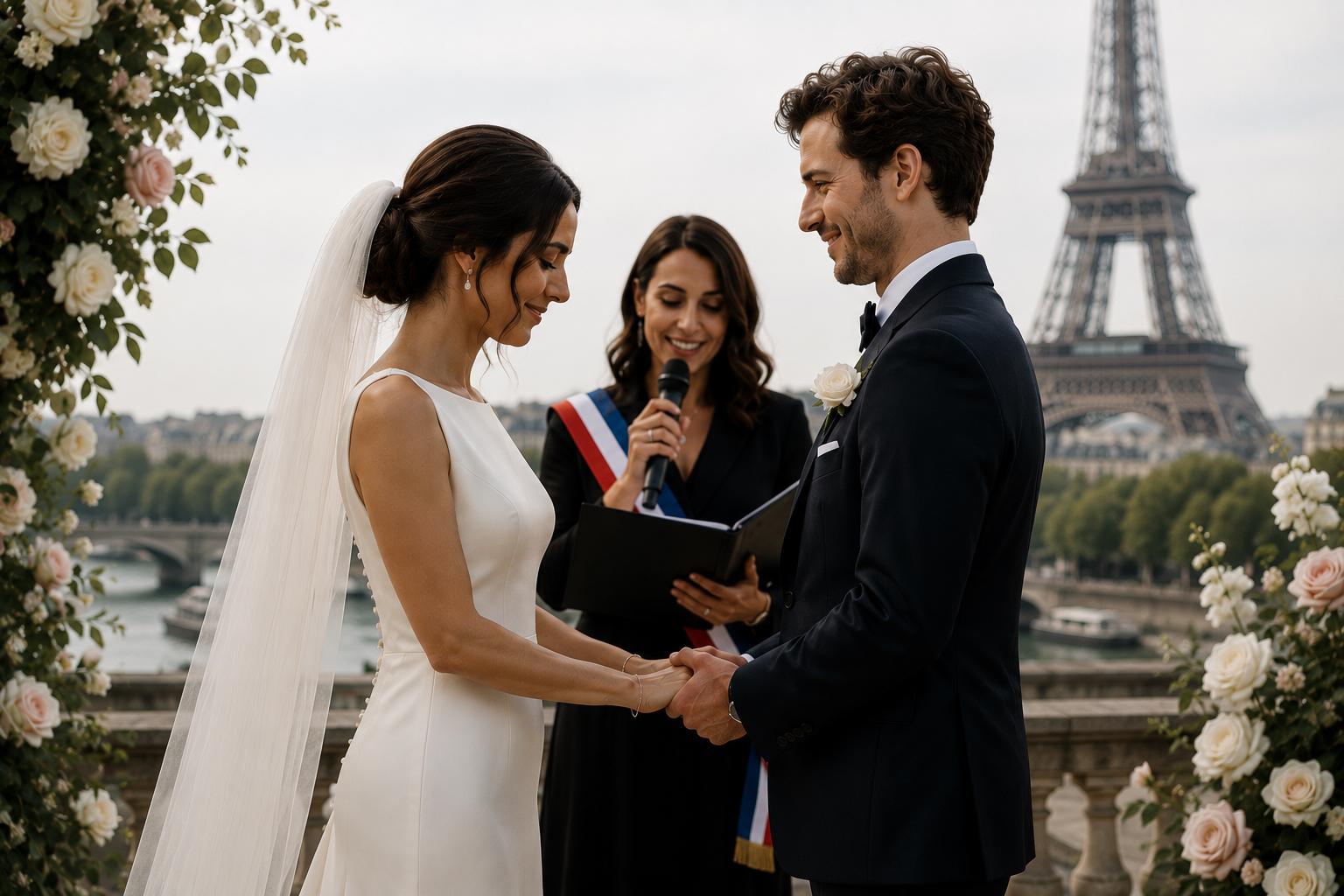
La cérémonie laïque. This is one of the biggest shift in modern French weddings. Many couples are now choosing a cérémonie laïque instead of a church ceremony. A cérémonie laïque is a secular, symbolic ceremony led by an officiant or a trusted family member, filled with readings, speeches, and stories that reflect the couple’s journey. Both church and symbolic ceremonies are beautiful and emotional. It really comes down to what fits best for you. One important thing to keep in mind: neither a cérémonie laïque nor a religious ceremony carries any legal weight in France. The legally binding part is the cérémonie civile, held at the mairie (town hall) and officiated by the mayor. For bilingual couples blending two ceremony traditions, read our guide on how to plan a beautiful bilingual wedding ceremony.
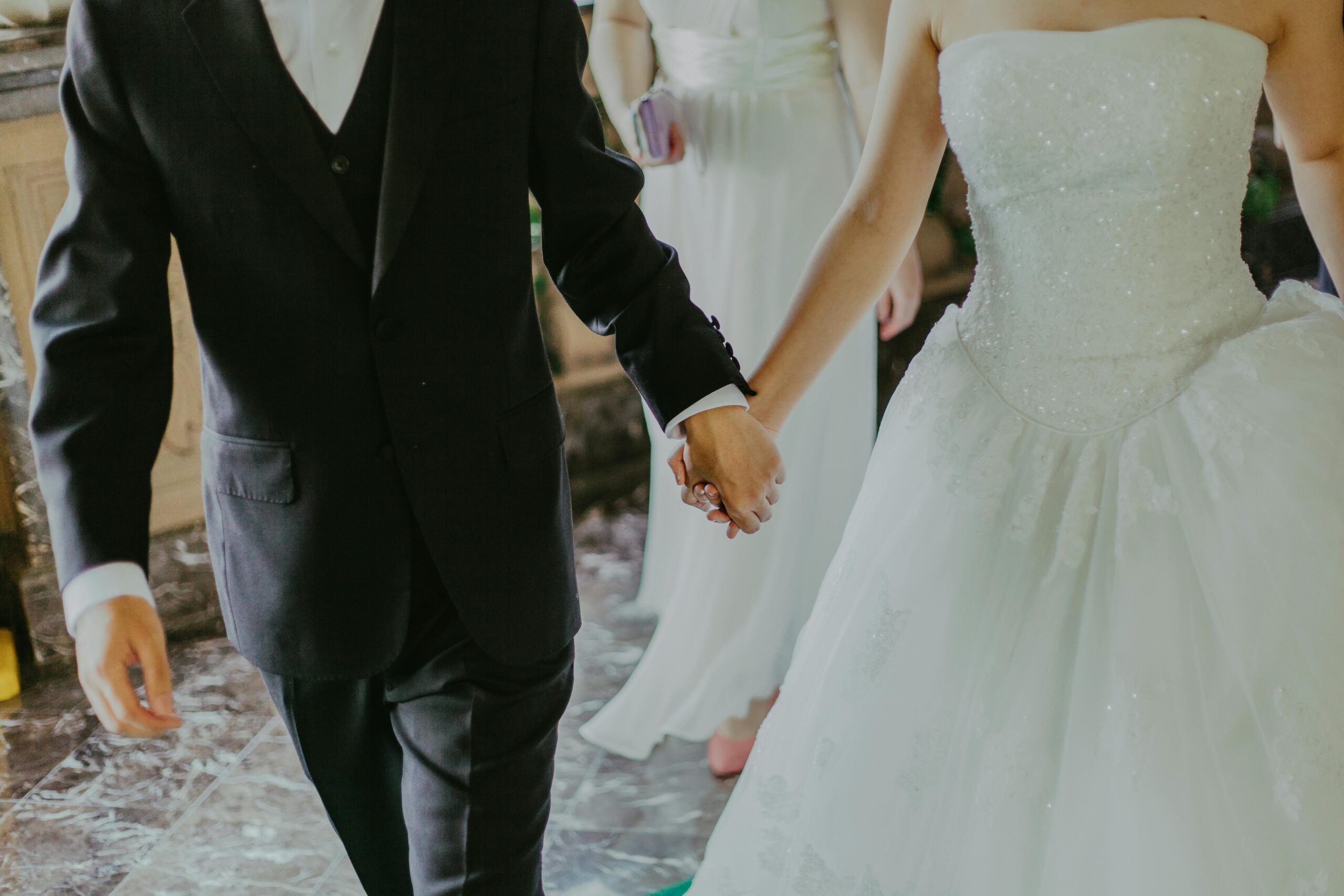
Le cortège. The cortège is the ceremonial procession into the ceremony, typically including the couple, their témoins, close family, and sometimes flower girls or ring bearers. Compared to American or Western weddings, French weddings tend to keep the wedding party smaller and more intimate.
Les rituels symboliques. Modern ceremonies often include a meaningful symbolic ritual beyond the exchange of rings. The most universal of course is the exchange of alliances (rings), a symbol of unity and commitment. But many couples also incorporate a sand ceremony, planting a tree together, a handfasting (tying of the wrists), or sealing a wine box with love letters to open on a future anniversary. These moments add a deeply personal layer to the ceremony that guests from both cultures can connect with.
La sortie des mariés. The French equivalent of the recessional. As the newlyweds walk back down the aisle, guests shower them with flower petals, lavender, biodegradable confetti, or small bundles to celebrate the union. Just make sure to check with your venue what’s allowed and what needs to be cleaned up afterward.
LE WEEKEND DE MARIAGE
The Wedding Weekend
Le week-end de mariage. Today’s French wedding is rarely a single day. Couples increasingly host multi-day wedding weekends that include a civil ceremony, welcome drinks the night before, the wedding itself, and a post-wedding gathering. It’s common to rent a château or domaine where everyone stays together for the festivities, making the experience feel less like a wedding and more like a reunion. As a bilingual or international bride, you know how rare it is to have everyone you love in the same place at the same time. When that moment comes, you want to make the most of it.
Le brunch du lendemain. Whether you’re a brunch person or not, the day-after brunch is now a beloved staple of French weddings. Guests reconvene the next morning (sometimes a little worse for wear) for a relaxed meal, leftover wedding food, and one last moment together before everyone heads home. It’s one of our favorite parts of the whole weekend.
Wedding day. And it’s not just the weekend that runs long. The wedding day itself is a marathon in the best possible way. A French wedding often begins in the afternoon with the ceremony and can easily carry on until sunrise, lasting 12 to 15 hours of celebrating. But don’t worry: with the vin d’honneur, a multi-course dinner, and a buffet de minuit to fuel you through the night, you’ll have everything you need to last until the very last song.
LE MENU
The Food
If there’s one thing the French take seriously at a wedding, it’s the food.
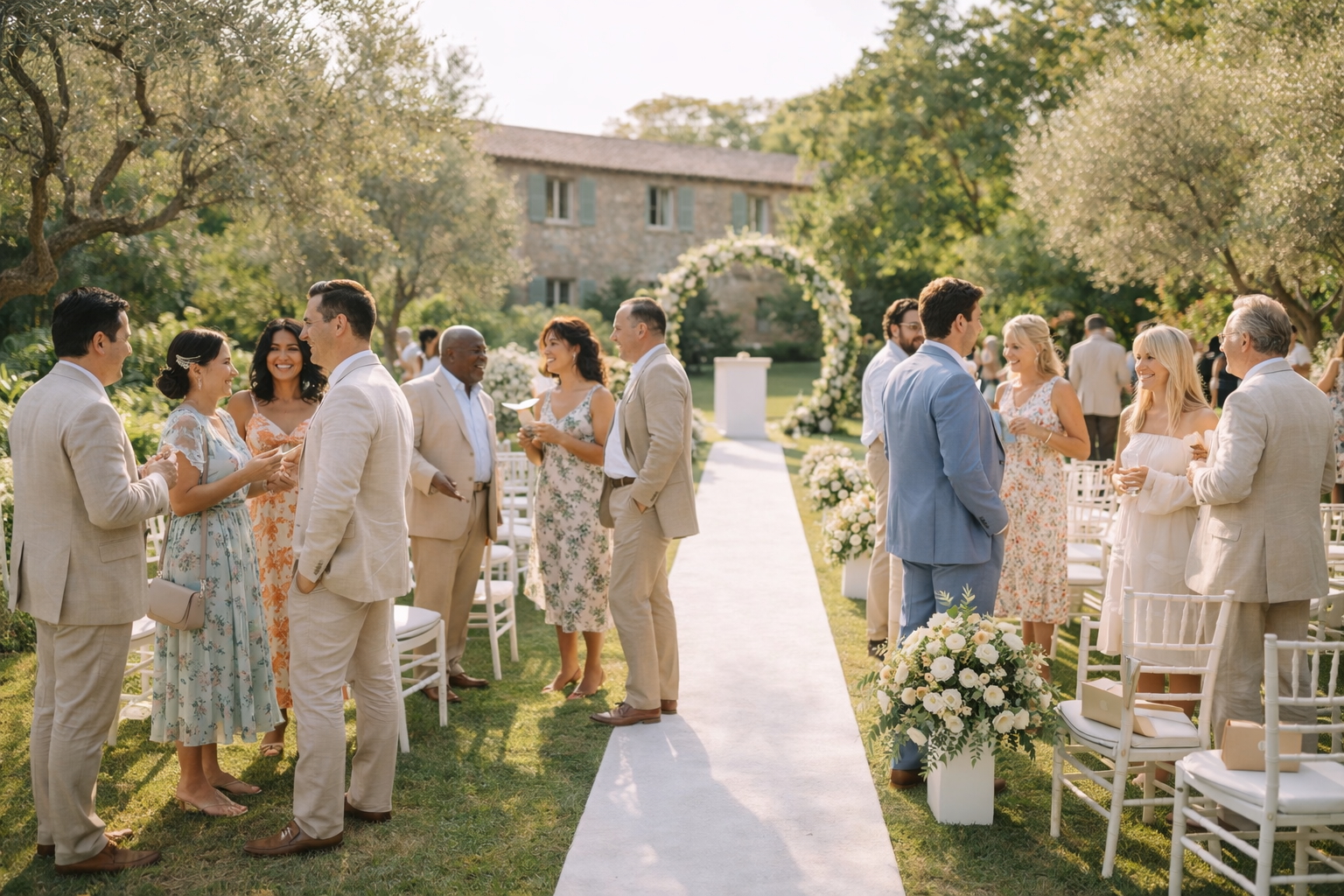
Le vin d’honneur. The “wine of honor” is the drinks-and-canapés reception held right after the ceremony, and one of the most cherished parts of a French wedding. It typically lasts one to three hours and includes champagne, wine, cocktails, and a generous spread of hors d’oeuvres. One French custom worth knowing: it’s completely normal, and not at all rude, to invite a wider circle of guests (colleagues, neighbors, extended family) to the ceremony and vin d’honneur while keeping the seated dinner and dancing for a smaller, more intimate group. Being invited au vin d’honneur is a warm and genuine gesture of inclusion.
Le plateau de fromages. For many French guests, the cheese course is just as important as dessert. After the main meal and before dessert comes a generous cheese board, sometimes an entire table of it. It’s a staple of French dining culture and weddings are absolutely no exception.
La pièce montée. The traditional French wedding cake isn’t a tiered cake at all. It’s a towering pyramid of cream-filled choux pastry, a croquembouche, often crowned with spun sugar and caramel threads. Plenty of modern couples serve it alongside a more familiar tiered cake so both sides of the family get the dessert they were picturing. The best of both worlds.
Les dragées. The classic French wedding favor: sugared almonds, traditionally given in sets of five, each one representing a wish for the couple: health, wealth, happiness, fertility, and long life. You’ll still find them at weddings today, though many modern couples opt for a bar à bonbons (candy bar) with a mix of sweets alongside them.
Le buffet de minuit. Just when you think you couldn’t possibly eat another bite, a late-night spread appears around midnight to refuel everyone for a few more hours of dancing. Usually crêpes, mini burgers, or croque-monsieur. Because a 15-hour wedding requires reinforcements.
LA FÊTE
The Party
L’ouverture du bal. The couple’s first dance, which formally “opens the ball” and launches the evening’s dancing. French receptions famously keep the energy going well into the night, and often until sunrise.
Les animations. French weddings keep speeches brief and lean instead on animations: interactive surprises organized by the témoins and close friends. Think video montages, games and quizzes about the couple, musical performances, surprise dances, and slideshows. The goal isn’t just to entertain guests. It’s to involve them.
Le lancer du bouquet. The bouquet toss is a classic in France too, but there’s also a fun alternative: the jeu du ruban (the ribbon game). Ribbons of different colors are tied to the bouquet, and each single lady takes hold of one while the bride stands in the center. The women circle around her holding their ribbon as the bride cuts them off one by one. The last woman still holding a ribbon attached to the bouquet wins it. A little more suspenseful, a lot more fun.
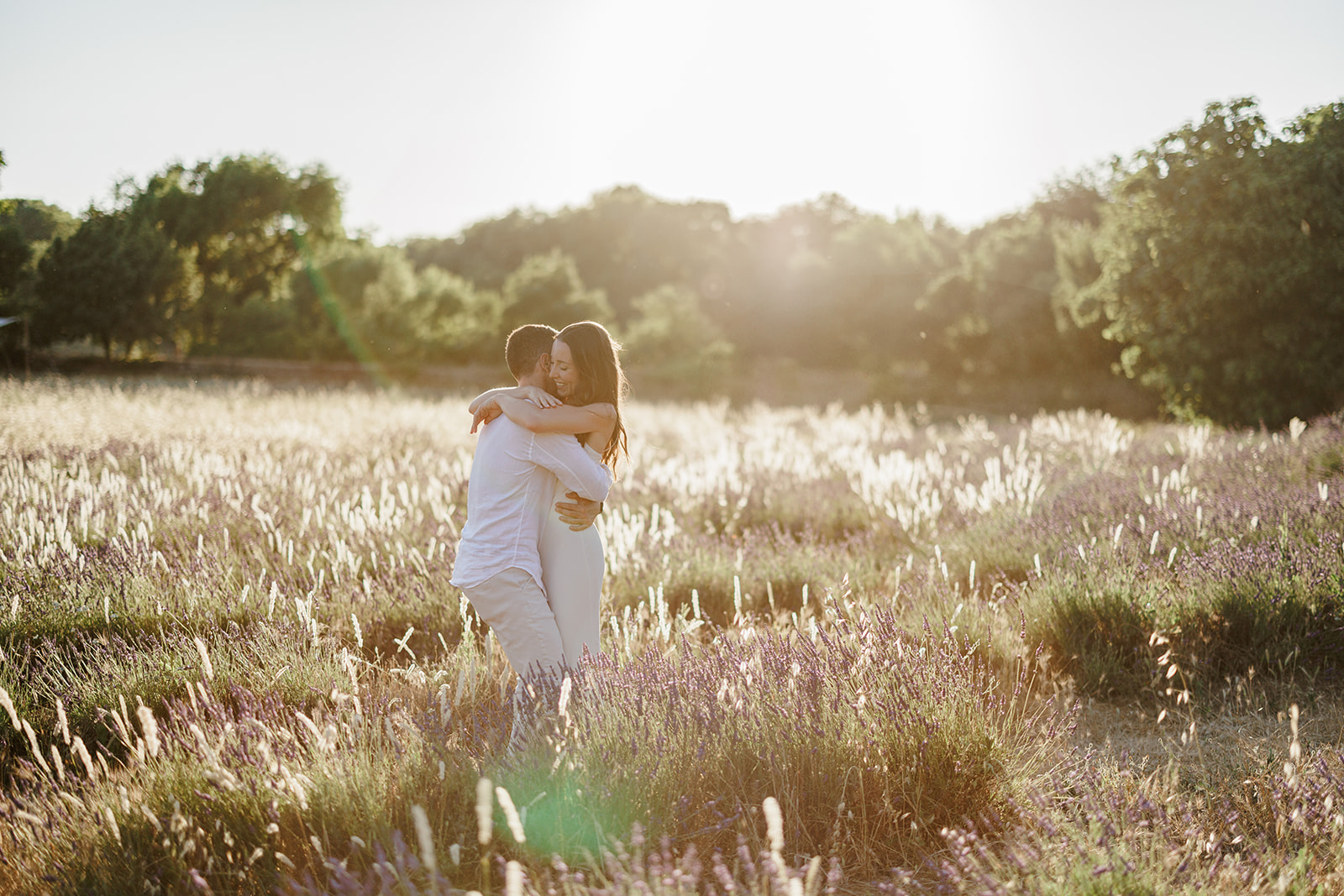
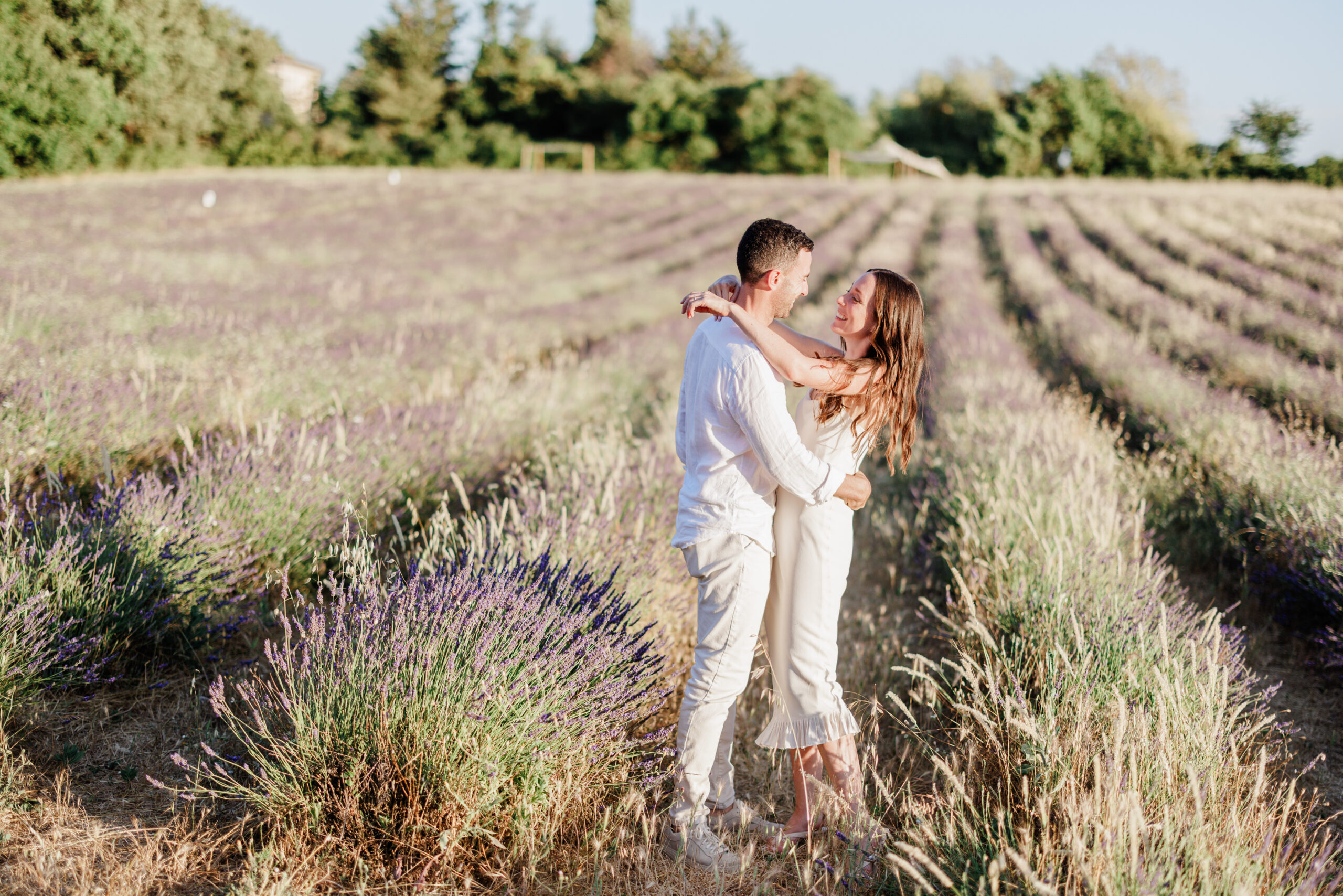
La séance “day after.” A newer, romantic tradition: a relaxed photo session the day after the wedding, back in your dress and suit but with zero pressure. In a field, on a beach, wherever’s beautiful nearby. All the magic of the wedding portraits, none of the schedule.
La voiture de mariage. No French wedding is complete without the wedding car. The couple’s ride is dressed up for the occasion with ribbons streaming from the hood, flowers, and often a “Vive les mariés” sign in the back window. But the real spectacle is the cortège de voitures: the whole line of guests follows the newlyweds from the mairie to the reception, horns honking the entire way, announcing to every village they pass that a wedding just happened. If you’ve ever heard a chorus of car horns rolling through a French town on a Saturday afternoon, now you know exactly what it means.
AVANT LE GRAND JOUR
Before the Big Day
L’EVJF and l’EVJG. The bachelorette and bachelor parties, short for enterrement de vie de jeune fille and enterrement de vie de jeune garçon, literally “the burial of single life.” Once a single night out, they’ve evolved into full weekends away: a spa retreat, a vineyard tour, a city break, sometimes another country entirely.
Les témoins. Each partner chooses one or two témoins, witnesses who sign the marriage register at the mairie and make the union official. It’s the closest French equivalent to a maid of honor or best man, but with real legal weight: their signatures are part of what makes the marriage legally recognized. Beyond the paperwork, témoins are usually the couple’s greatest supporters, organizing the EVJF and EVJG and many of the animations. For bilingual couples, they often become cultural ambassadors who help welcome guests from abroad and bridge the two worlds being celebrated.
A CULTURAL NOTE
Children Are Part of the Celebration
One cultural difference that surprises many English-speaking couples is how welcome children are at French weddings. While adults-only celebrations have grown common in North America, many French couples embrace the whole family: children playing in the gardens, dancing into the evening, and gathering around a dedicated kids’ table. Some couples hire babysitters or entertainers so parents can fully relax. Rather than a disruption, children are seen as part of the day’s joy and family spirit. It’s a beautiful cultural difference worth knowing about when you’re blending two wedding traditions.
Final Thoughts
The beauty of a bilingual or destination wedding isn’t choosing one culture over another. It’s creating a celebration where both families, both cultures, and both countries feel equally at home. Whether you incorporate traditional French touches like les dragées or more modern ones like the brunch du lendemain, you get to decide how you celebrate. That’s the best part.
If you’re incorporating French into your celebration, our French-English invitation wording guide will help you get the language beautifully right on your invitations and signage. And our French-English wedding glossary covers every bilingual term you’ll actually use while planning a wedding in France.
✦ From our shop
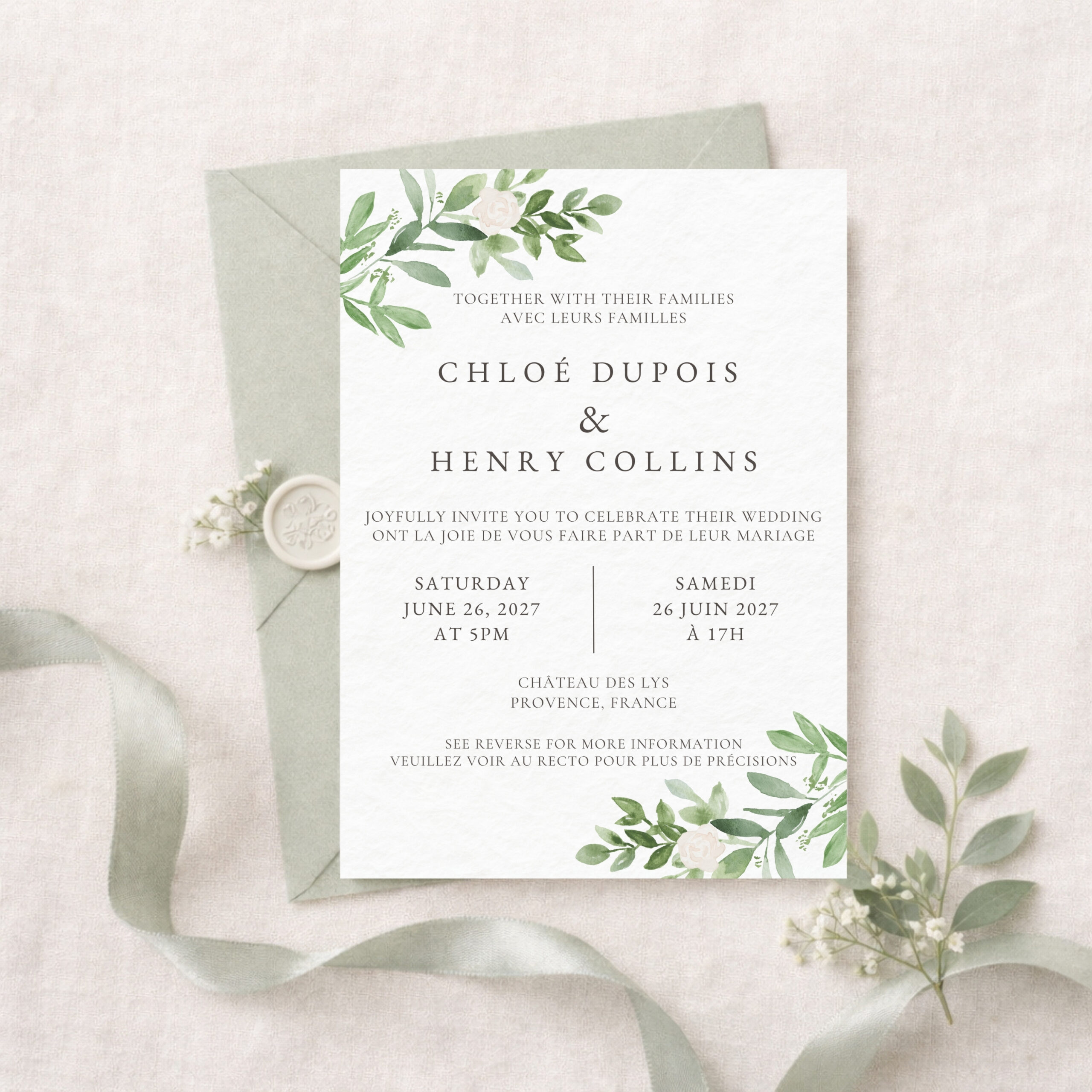
Beautiful, fully bilingual wedding invitation templates designed for French destination weddings. Easy to customize, instant download.
Frequently Asked Questions
What are the most important French wedding traditions?
The key French wedding traditions include the cérémonie civile at the mairie (the legally binding ceremony), the vin d’honneur (cocktail hour after the ceremony), the multi-course dinner, the buffet de minuit (midnight snack), les dragées (sugared almond favors), and the cortège de voitures (the horn-honking procession of cars). Modern couples also often include a cérémonie laïque, a day-after brunch, and a day-after photo session.
What is a cérémonie laïque in France?
A cérémonie laïque is a secular, symbolic wedding ceremony led by an officiant or trusted family member rather than a religious figure or civil mayor. It’s deeply personal and filled with readings, stories, and rituals chosen by the couple. It carries no legal weight in France — the legally binding ceremony is always the civil one at the mairie — but it’s where most of the emotional magic of a French wedding happens.
What is the vin d’honneur at a French wedding?
The vin d’honneur is the cocktail reception held immediately after the wedding ceremony. It typically lasts one to three hours and includes champagne, wine, and canapés. It’s one of the most cherished parts of a French wedding and often involves a wider circle of guests than the seated dinner that follows.
What are les dragées at a French wedding?
Les dragées are sugared almonds, the traditional French wedding favor. They’re given in sets of five, each representing a wish for the couple: health, wealth, happiness, fertility, and long life. While still popular today, many modern couples now pair them with a bar à bonbons (candy bar) as a more contemporary alternative.
How long does a French wedding last?
A French wedding is famously long. The celebration typically begins in the afternoon with the ceremony and can easily continue until sunrise, lasting 12 to 15 hours. The evening flows from the vin d’honneur to a multi-course dinner to dancing, with a buffet de minuit around midnight to keep the energy going. Many couples also extend the celebration across a full wedding weekend.