✦ In this postYour complete French-English wedding glossary with the bilingual vocabulary you’ll actually use while planning a wedding in France, from stationery and ceremony to reception, people, and the little details.
Planning a wedding means learning a whole new vocabulary. And when it’s a destination wedding or bilingual wedding, that vocabulary doubles. Suddenly you’re not just sending a wedding invitation, but a faire-part. You’re not just planning a cocktail hour, but a vin d’honneur. And your guests aren’t just signing a guest book, they’re signing a livre d’or.
Consider this your complete bilingual wedding glossary with the English and French words you’ll actually use while planning a wedding in France. From stationery and your wedding website to signage and every moment in between, we’ve got you covered. And if you’re looking for ready-to-use wording examples for your invitation suite, read our French-English wedding invitation wording guide next.
STATIONERY
The Paper Trail
These are the words that live on your invitation suite, your wedding website, and everywhere guests encounter your wedding in writing before the big day.
An easy one to start with: RSVP is already French (it’s short for Répondez S’il Vous Plaît), so both sides understand it instinctively. Save the date has also become so common in France that you can leave it in English if you prefer. Just say it with a French accent and you’re set.
The one to know is faire-part, the traditional French word for a formal wedding announcement. It comes from faire part de, “to share the news of,” and it’s the word your French guests will use for the whole invitation suite.
| English | French |
|---|---|
| Engaged | Fiancés |
| Engagement | Fiançailles |
| Save the Date | Réservez la date |
| Wedding announcement and invitation | Faire-part |
| RSVP | RSVP / Merci de répondre |
| Menu | Menu |
| Order of the day | Déroulé de la journée |
| Dress Code | Tenue |
| Thank-you card | Carte de remerciement |
CEREMONY
The Ceremony
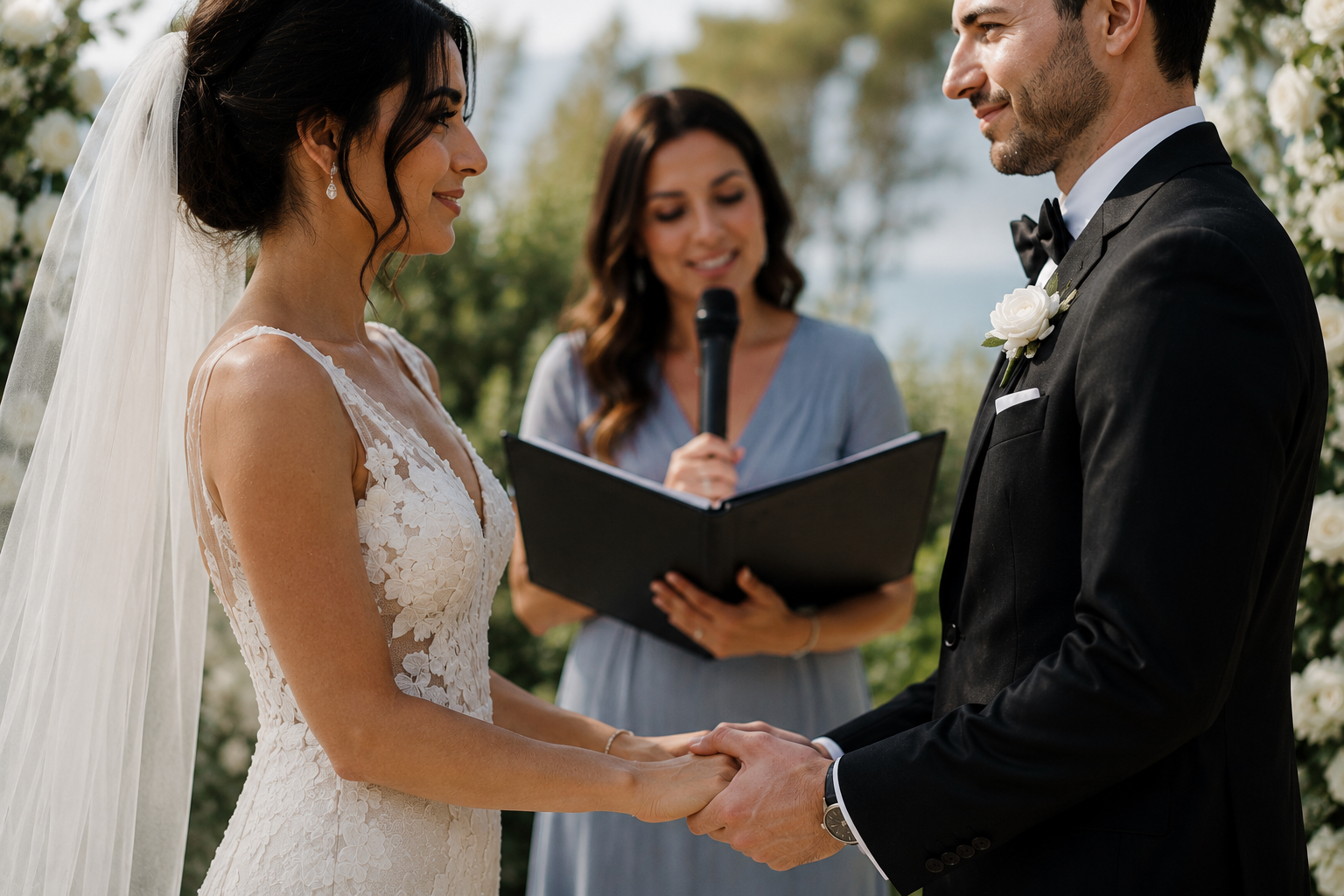
The heart of the day. In France, the legally binding wedding is the civil one, held at the town hall and performed by the mayor. A religious or symbolic ceremony can follow, but it’s the cérémonie civile that actually marries you. So for many French weddings there are two ceremonies: the cérémonie civile and either a cérémonie religieuse or a cérémonie laïque.
And for a romantic touch: the French word for wedding rings is alliances, from the idea of two lives and two families joined in alliance. For more on how to structure your bilingual ceremony so every guest feels included, read our guide on how to plan a beautiful bilingual wedding ceremony.
| English | French |
|---|---|
| Wedding ceremony | Cérémonie |
| Civil ceremony | Cérémonie civile |
| Town hall | Mairie |
| Religious ceremony | Cérémonie religieuse |
| Symbolic (non-religious) ceremony | Cérémonie laïque |
| Officiant | Officiant(e) |
| Vows | Vœux |
| Wedding rings | Alliances |
| Marriage certificate | Acte de mariage |
RECEPTION
The Celebration
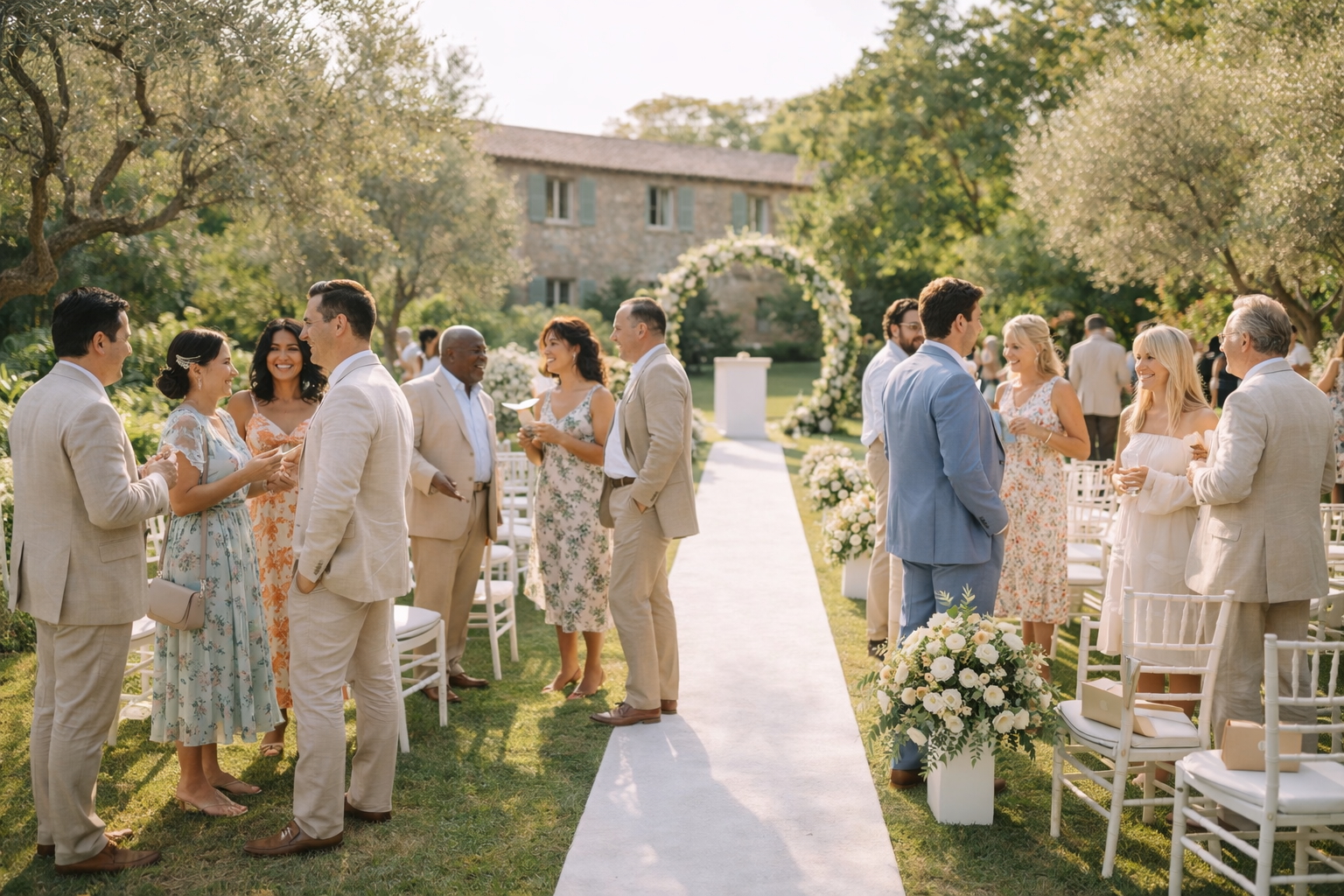
Here comes the fun part. In French, the cocktail hour that follows the ceremony is traditionally called vin d’honneur, the “wine of honor.” And soirée dansante, “dancing evening,” somehow sounds more like a party than the English version! Fun bonus: the French really do just call the late-night after-party the “after.” Some things transcend language.
| English | French |
|---|---|
| Cocktail hour | Vin d’honneur |
| Reception | Réception |
| Dinner | Dîner |
| Toast / speech | Discours |
| Champagne toast | Coupe de champagne |
| Dancing | Soirée dansante |
| Open bar | Bar à volonté |
| After-party | After |
PEOPLE
Your Party People
Here’s where some translations don’t match word for word because the American-style wedding party doesn’t map neatly onto French wedding tradition. In French, témoin is your witness, the person who signs the marriage register at the townhall. It’s the closest equivalent to a maid of honor or best man, and it carries real legal weight.
So if you’re blending traditions, you might have both: your témoins who are the official witnesses signing the legal document, and your demoiselles d’honneur, your symbolic bridesmaids who are there for the love and the matching dresses. For more on blending two sets of traditions beautifully, read our guide on 10 tips to make guests feel included at a bilingual wedding.
| English | French |
|---|---|
| Bride | Mariée |
| Groom | Marié |
| Newlyweds | Les mariés |
| Witness | Témoin |
| Maid of honor | Témoin |
| Best man | Témoin |
| Wedding party | Cortège |
| Bridesmaid | Demoiselle d’honneur |
| Groomsman | Garçon d’honneur |
| Flower girl | Petite fille d’honneur |
| Ring bearer | Porteur des alliances |
| Vendors | Prestataires |
DETAILS
The Little Details
The finishing touches: the vocabulary of your tables, your décor, and your takeaways. The most special one here is livre d’or. Where English says the rather plain “guest book,” French says the “book of gold.” Because all those words from family and friends really is gold.
| English | French |
|---|---|
| Seating chart | Plan de table |
| Table number | Numéro de table |
| Escort card | Carton de placement |
| Centerpiece | Centre de table |
| Bouquet | Bouquet |
| Aisle | Allée |
| Arch | Arche |
| Petals | Pétales |
| Wedding favors | Cadeaux aux invités |
| Guest book | Livre d’or |
NUANCES
A Few Nuances to Watch
A handful of wedding words look like they translate directly between French and English, and then don’t. These are the ones that catch couples out most often.
Entrée. On a French menu, the entrée is the starter, not the main course. Your English “entrée” (the main dish) is the French plat. Crossing these is the most common bilingual menu mix-up there is, so double-check your menu cards before it goes to print.
Tenue. Tenue de soirée for black tie, tenue de cocktail for dressy. Neither maps perfectly so when in doubt, add a short description on your wedding website to give guests from all backgrounds a clear picture.
Réception. It looks like a perfect match, and mostly is. Just know that in France réception leans toward the whole celebration, while the sit-down meal itself is the dîner.
Final Thoughts
Two languages, two cultures, two families, all gathering in the same room to celebrate the same love story. The words might be different, but the feeling is exactly the same.
The couples who pull off a truly bilingual wedding aren’t the ones who translated everything perfectly. They’re the ones who made every single guest feel like part of the big day. And that starts with your save the date or invitation. For ready-to-use French-English invitation wording, read our complete French-English invitation wording guide.
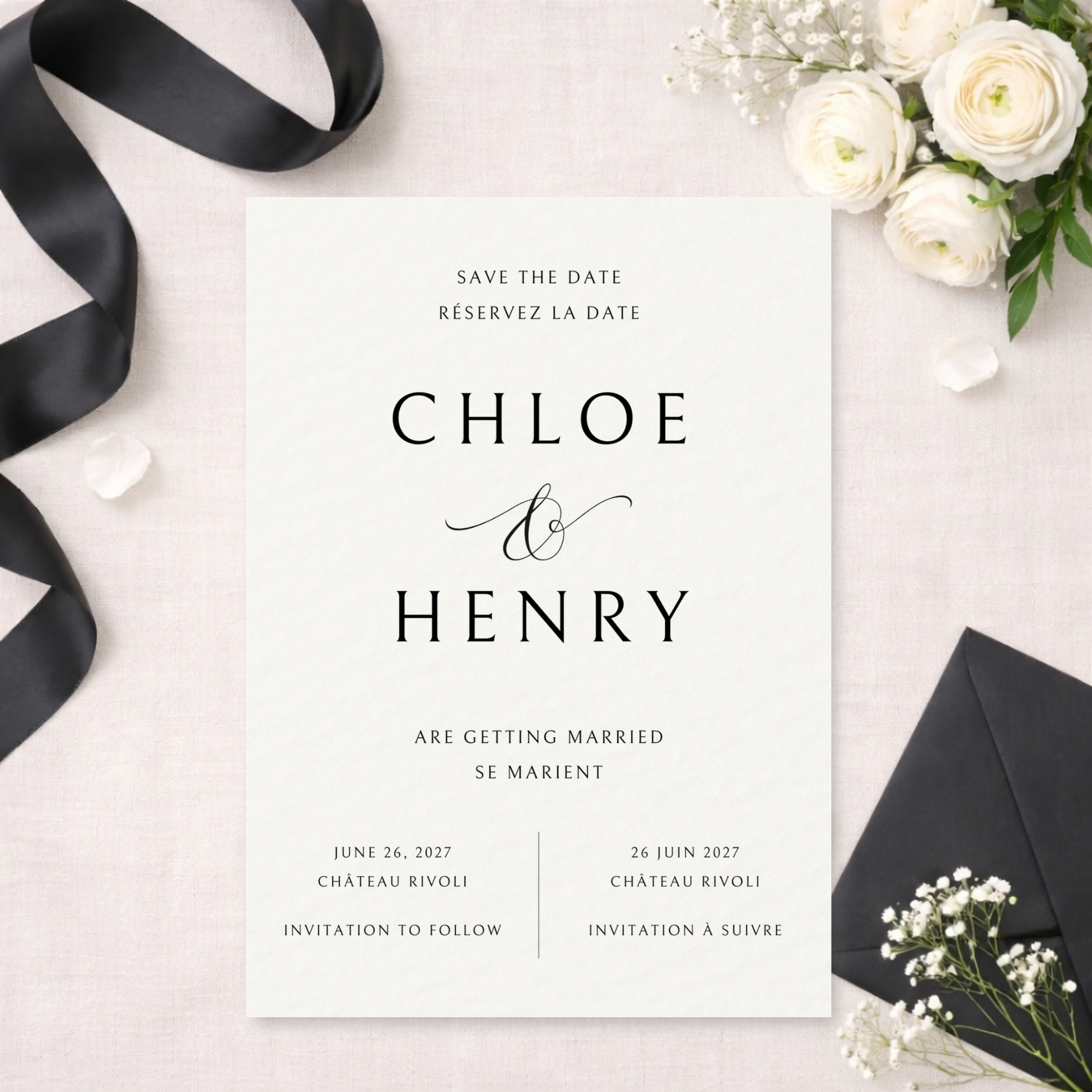
✦ From our shop
Minimalist, elegant, and fully bilingual. Designed for French-English destination weddings. Easy to customize, instant download.
Frequently Asked Questions
What is a faire-part in French weddings?
A faire-part is the traditional French term for a formal wedding announcement or invitation. It comes from the phrase faire part de, meaning “to share the news of.” It’s the word your French guests will use to refer to the entire invitation suite, and using it on your stationery signals that you’ve done your cultural homework.
What is the French word for wedding rings?
Wedding rings in French are called alliances, from the idea of two lives and two families joined in alliance. It’s one of the most beautiful French wedding words and worth using on your bilingual ceremony program or stationery if you want a meaningful touch.
What is a vin d’honneur at a French wedding?
The vin d’honneur is the cocktail hour that follows the ceremony at a French wedding. It literally means “wine of honor” and is traditionally the moment when the newlyweds receive their guests for the first time. It’s the equivalent of a cocktail reception and is one of the most distinctly French parts of a wedding celebration.
What is the difference between témoin and maid of honor in French weddings?
In French weddings, the témoin is the legal witness who signs the marriage register at the mairie. It carries real legal weight and is the closest French equivalent to a maid of honor or best man. For bilingual weddings blending French and American traditions, many couples have both témoins for the legal ceremony and demoiselles d’honneur for the symbolic celebration.
How do you say guest book in French?
Guest book in French is livre d’or, which literally translates as “book of gold.” It’s one of those French wedding words that is simply more beautiful than its English equivalent, and a lovely detail to include on bilingual signage at your reception.