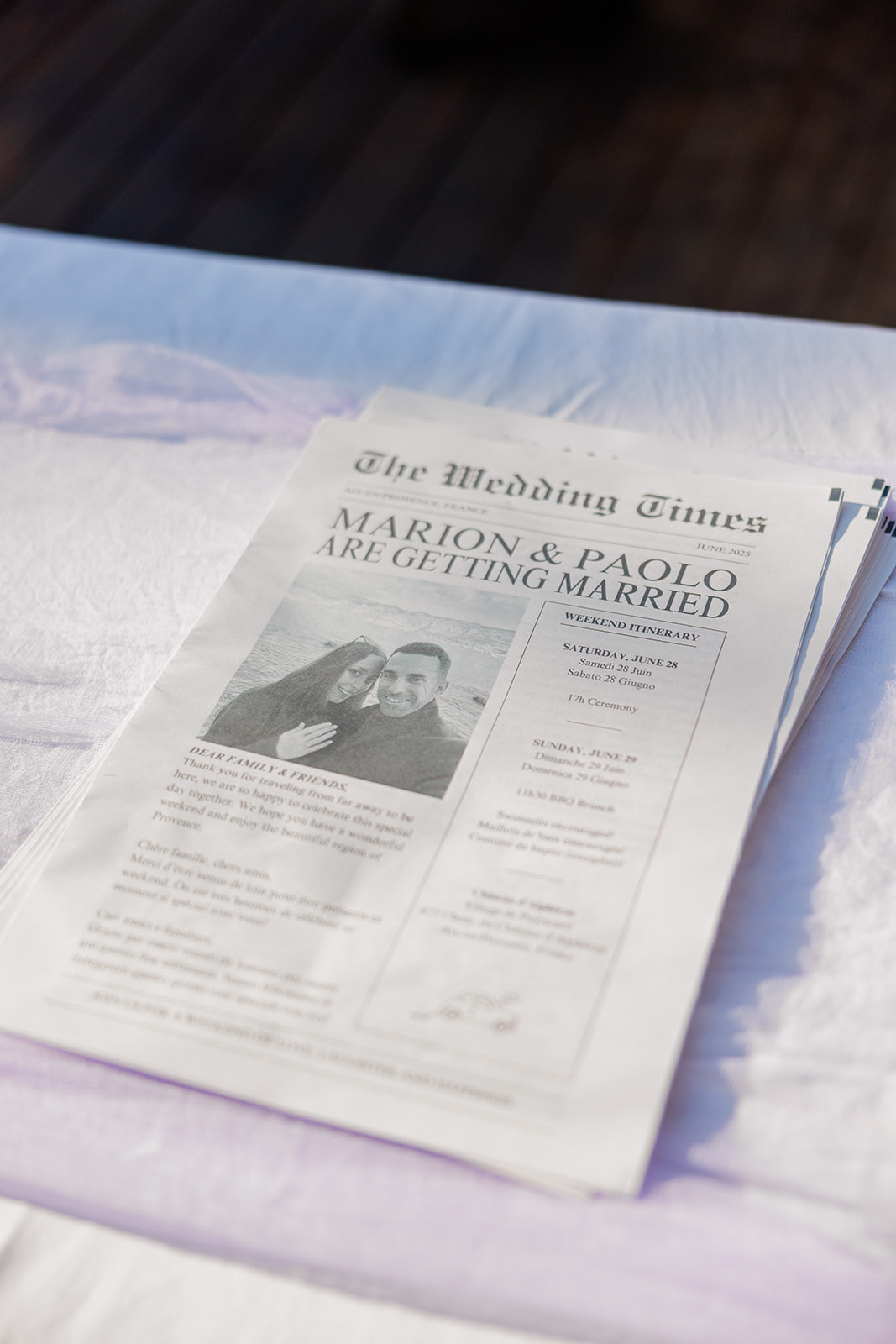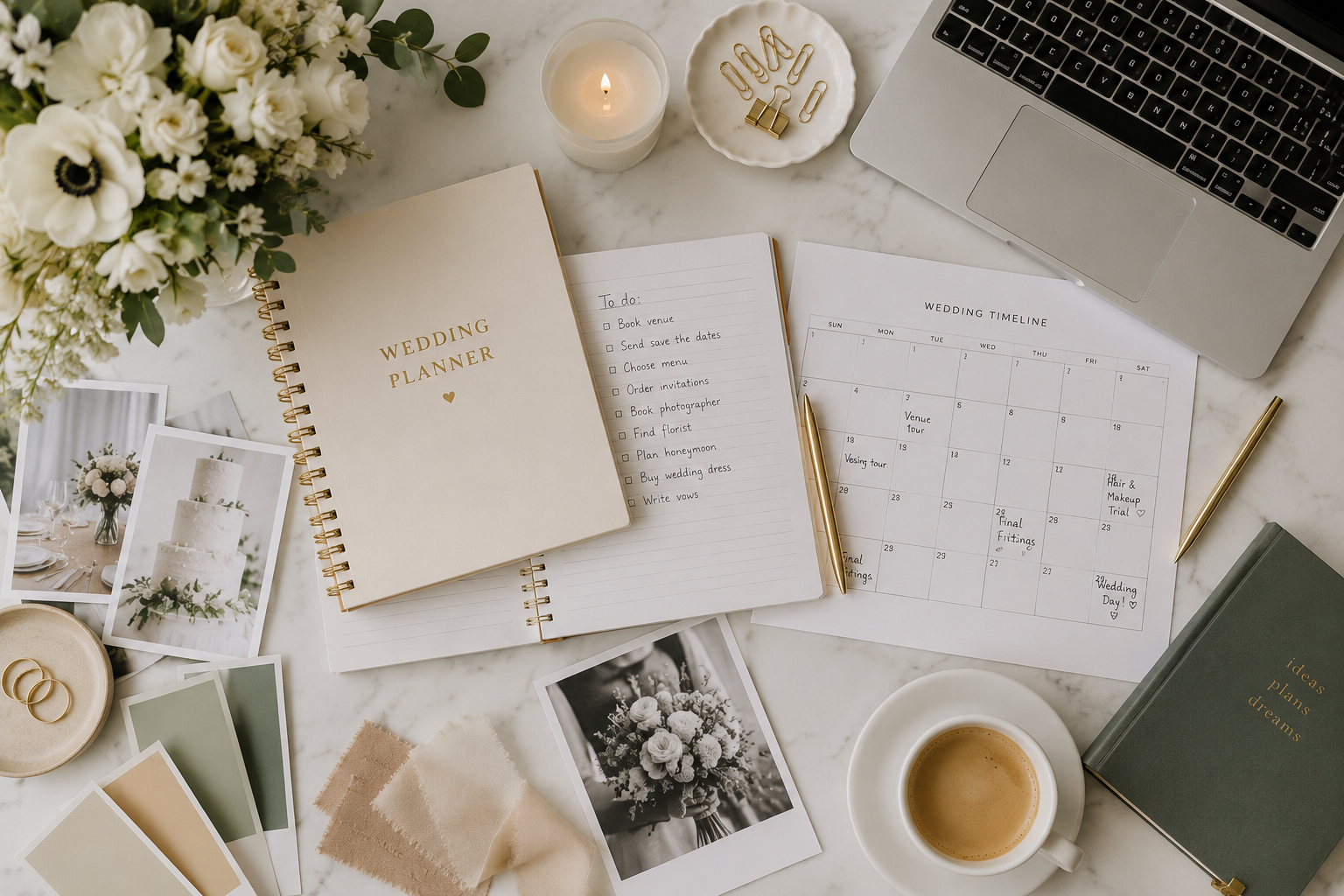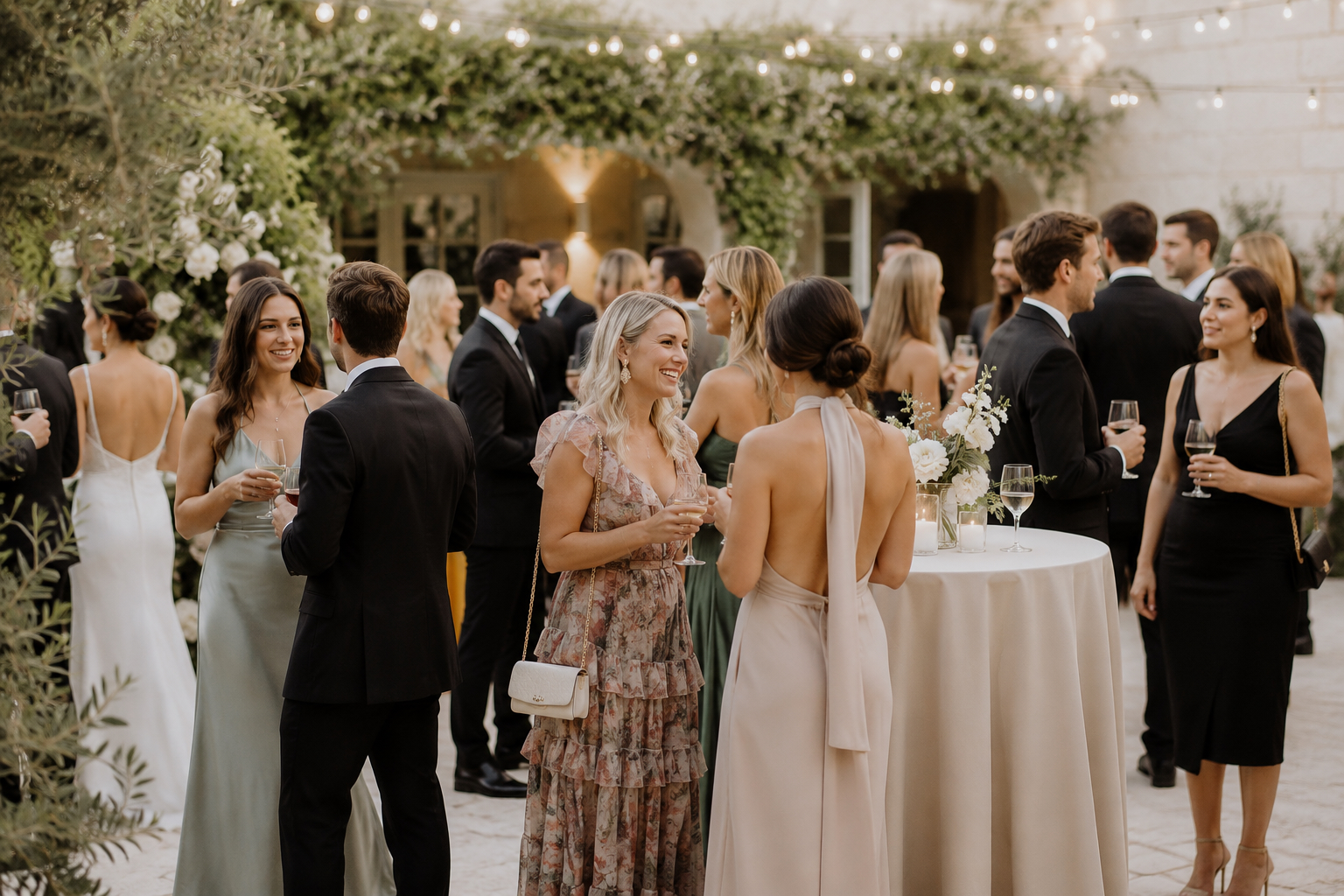
You’ve probably seen this meme on Instagram, TikTok, or Pinterest while doom-scrolling for wedding inspo. And if it hasn’t reached you yet, trust me, the algorithm will eventually find you. It’s the one about the five emotional stages of wedding planning. If you don’t know what I’m talking about, check it out. It’s hilarious, but it’s also so accurate. Which is exactly why I wanted to break it down in a bit more detail, especially if you’re planning a bilingual or destination wedding. So if you’re deep into wedding planning already, take a deep breath (or a shot) and let’s walk through it together.
STAGE 1
Excitement
Congratulations, Future Mrs! You’re newly engaged and floating on cloud nine. Whether it was a total surprise or you spotted the ring in his underwear drawer months ago, you and your fiancé are now officially over the moon.
This is the dreamy phase: Pinterest boards exploding with inspo, TikToks saved by the dozens, FaceTiming loved ones, popping bubbly with friends, and starting your vision board. Enjoy it. Truly soak in that “just engaged” glow, because like all honeymoon phases… it fades.
And here’s when reality first peeks in: the questions. When you announce your engagement to family and friends, their first question is: “When’s the wedding?” That’s quickly followed by “Where’s the wedding?” – especially if you’re a bilingual, trilingual, multicultural, or international bride. If you’re not sure where to start, we put together 8 first steps for planning a bilingual wedding that will help you get your footing. Which brings us to…
STAGE 2
Reality
Then reality hits and it hits hard. You’ve started reaching out to vendors and suddenly the numbers start rolling in. “Wait, what do you mean $20,000 just to rent a venue for one night… with no food, no décor, no tables, no chairs?!” Cue panic mode.
I’ve been there. I remember thinking maybe we just elope, no big wedding because everything on my Pinterest board seemed over budget and I still wanted to do things beautifully.
Here’s the truth: your wedding is about celebrating love with your people. They don’t care which vendor you booked or which Pinterest mood board you couldn’t quite recreate. They’ll have a great time because of the energy in the room, not the chair covers.
STAGE 3
Panic
It’s basically the mid-life crisis of wedding planning. You’re balancing the budget, managing guest lists, navigating family expectations, and have 100+ email correspondences with vendors. This is where wedding planning becomes a marathon, not a sprint.
It’s easy to feel overwhelmed, but go with your gut. Every decision won’t be perfect, but it will all be worth it in the end. Promise.
STAGE 4
Bills, Lots of Bills
The invoices start piling up. You made that first 30% deposit months ago, but then (surprise!) the remaining 70% is due all at once. And often… it’s due on your actual wedding day. As if you have time to chase payments while you’re getting ready.
This is the moment to delegate or automate. Set up scheduled payments and wire transfers ahead of time in your banking app. And if you haven’t already, read our guide on how to negotiate with wedding vendors, there are still ways to find flexibility even at this stage.
Pro tipIf you’re wiring money internationally, account for processing delays. Always save confirmation receipts and share them with vendors so nothing gets lost in translation (literally). For international payments, we also recommend using Wise – it minimizes transfer fees and exchange rate markups, which adds up fast when you’re paying multiple vendors across different countries. Use our link for a discount on your first transfer.
STAGE 5
It’s D-Day!
After months of planning, endless emails, spreadsheets, and deposits… it’s here. Time to rock and roll. Yes, you’ll be nervous. Yes, you’ll want every detail to be perfect. But your job now is to let go. Step back and immerse yourself in the moment. The day flies by faster than you think, and the last thing you want is to realize you were too busy managing details to enjoy it.
If you want to start the day feeling grounded, we’ve shared a few simple ways to stay calm and present from the very start of your special day.
READ: TIPS TO STAY PRESENT ON D-DAY →
One Last Thing
Through all the highs and lows of planning, I want you to keep this perspective throughout: gratitude. How grateful are you to have found your person. How grateful that you get to plan a wedding. How grateful you are to have loved ones who will travel the world just to celebrate your love.
Hold on to that, and trust that everything else will fall into place. Every couple’s planning journey looks different but almost every couple, on the other side of it, says the same thing: it was completely worth it.
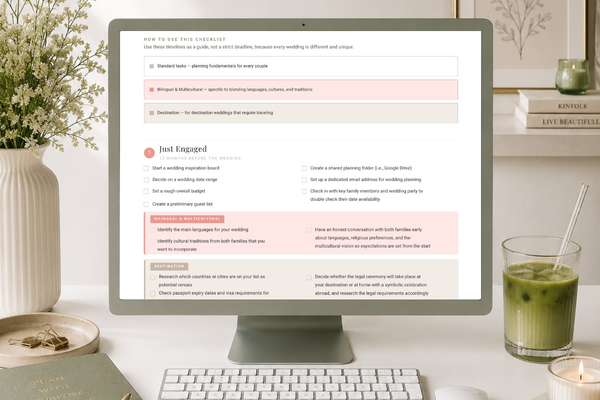
✦ Free download
200+ tasks across 22 categories — your step-by-step guide through every stage of wedding planning. Free, instant download.
Frequently Asked Questions
What are the stages of wedding planning stress?
Most couples go through five emotional stages: excitement right after the engagement, reality when vendor quotes start coming in, panic during the thick of planning, the financial stress of final payments, and finally the rush of the wedding day itself. Knowing these stages in advance helps you navigate them with more grace.
How do you stay calm during wedding planning?
The most important thing is to make decisions one at a time and avoid spiraling when things feel overwhelming. Step away for 24-48 hours when stress peaks, lean on your partner, and remember that your guests are there for you, not the details.
How long does wedding planning take?
For most weddings, 12 months is the minimum. For destination or bilingual weddings involving international guests, vendors, and travel logistics, 14-18 months is more realistic and gives you enough time to make thoughtful decisions without feeling rushed.
Is it normal to feel overwhelmed when planning a wedding?
Completely normal. Almost every couple hits a wall at some point usually around Stage 2 or Stage 3 when the reality of costs and coordination sets in. It doesn’t mean you’re doing anything wrong. It means you’re planning a wedding.
What is the hardest part of planning a destination wedding?
Coordinating international vendors, managing guest travel logistics, and navigating different cultural expectations all at once. Add in language barriers and time zone differences and it becomes a full-time project. Starting early and staying organized from day one makes the biggest difference.